















Article Contents:
- What are decorative elements for moldings — corner blocks, rosettes, inserts
- The problem they solve
- Corner blocks: internal and external, left and right
- Central overlays: focus on a long wall section
- Side and connecting elements: N.VRS-003 series
- Specialized overlays: N-416, N-383, N-500
- Types: wooden and polyurethane — what's the difference
- Wooden decor: tactile authenticity
- Polyurethane decor: lightness and moisture resistance
- Comparison in one table
- How to choose a decorative element for molding by size and profile
- System matching principle
- How to measure the required element
- Character of ornament: unity of decorative language
- Polyurethane decor - advantages and applications
- Why polyurethane decor has taken such a place in the market
- Bathrooms and kitchens: where wood doesn't work
- Building facades: exterior decor
- Furniture Manufacturing: Scale and Reproducibility
- Installation of Corner Blocks and Joint Elements
- Preparation: Precision at Input — Precision at Output
- Adhesive: What to Choose for Wood, What for Polyurethane
- Joint Sealing: The Final Touch That Decides Everything
- Installation on Furniture Fronts
- FAQ: Answers to Popular Questions
- About the Company STAVROS

Molding without a corner is an unfinished thought. A line that goes on and on and suddenly breaks off at a joint, not transitioning into the next span, not turning into a corner beautifully and precisely. It is precisely at this point—in the corner, at the joint, in the center of a long wall section—that either a professional result or an amateurish semblance of repair is born.
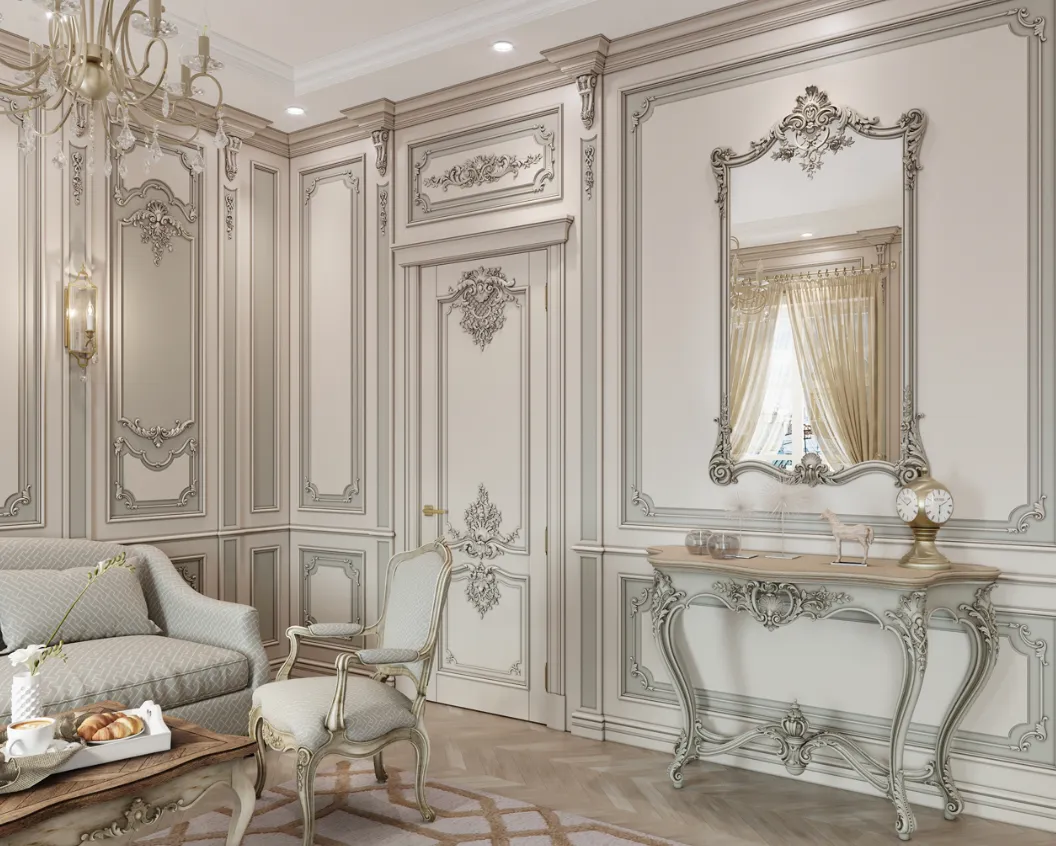
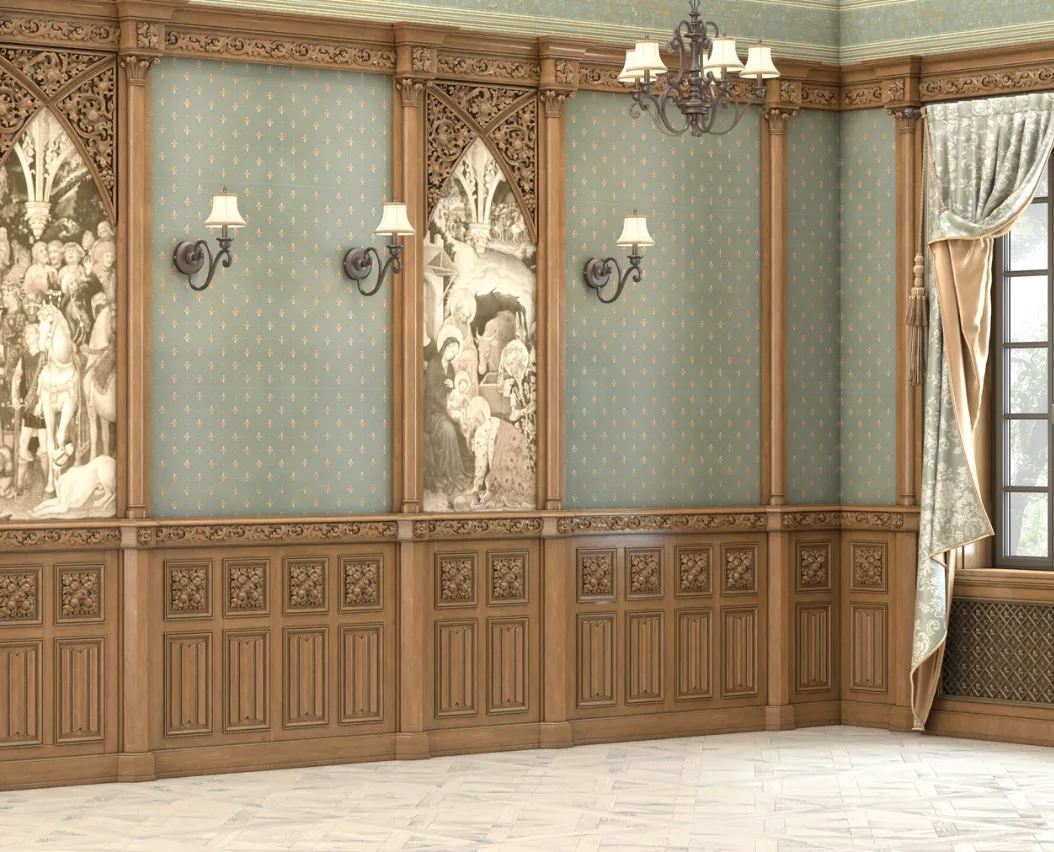
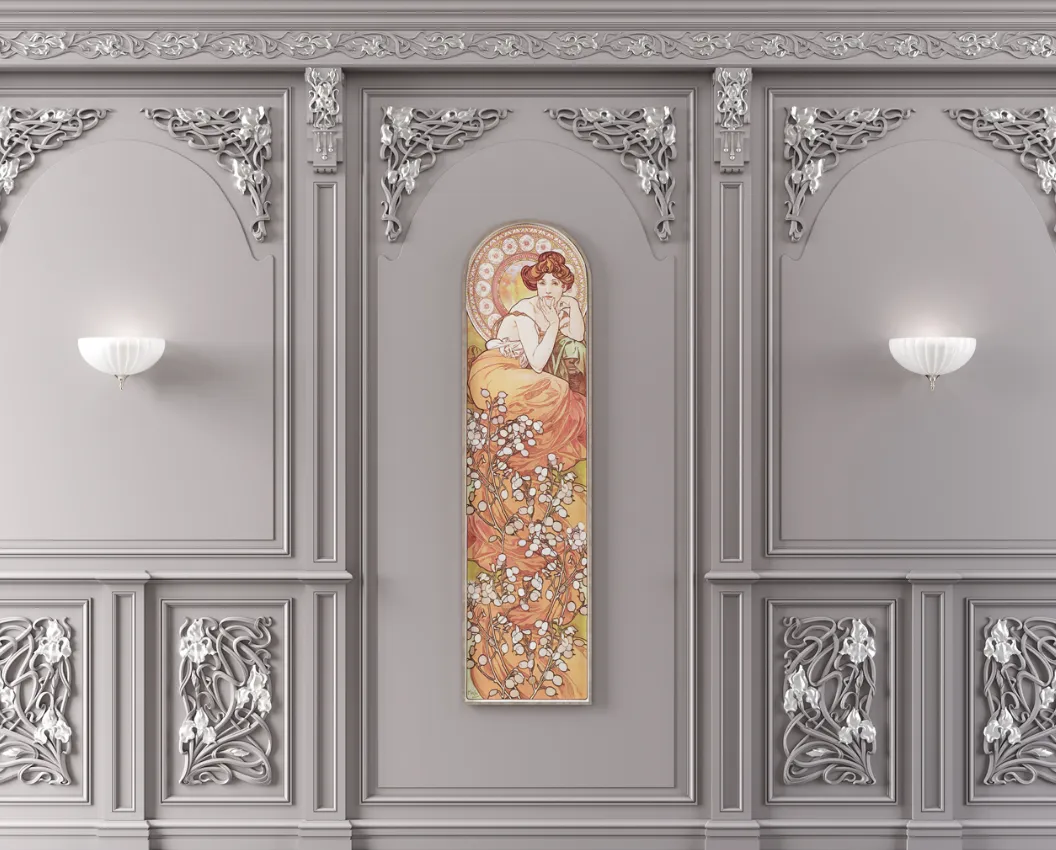
molding decorative elements— these are not 'additional parts.' They are the nodal points of the entire ornamental system. Corner blocks, central overlays, rosettes, joint inserts—they solve where the molding itself cannot: they hide connections, adorn transitions, complete the composition. And it is precisely the quality of these parts that determines whether the entire work will look like a professional project—or like a set of beautiful but unrelated fragments.
STAVROSdecorative elementsfor moldings are available in more than 30 models—made of solid oak and beech, as well as polyurethane. Price range: from 500 rubles for a simple corner block to 9,810 rubles for a product with rich carved ornamentation. This is a system, not a collection. And it is precisely the systematic approach to molding decoration that makes the result flawless.


What are decorative elements for moldings—corner blocks, rosettes, inserts
The problem they solve
Let's start with the main point: why are they even needed? Can't you just cut a molding at 45° and join it neatly in the corner?
Theoretically, you can. In practice, it's one of the most difficult operations in carpentry installation. The miter angle must be perfectly precise: a deviation of 1° creates a gap at the joint that cannot be hidden. The cut surface must be sanded to zero roughness, otherwise a stripe will form at the joint. If the molding has a profiled cross-section, it has to be cut on a profile saw stand, which no non-professional has.
A corner block completely eliminates this problem. Moldings are cut at a right angle—the simplest operation with a regular handsaw—and joined to the side faces of the block. The corner is solved without miter cuts, without gaps, without the risk of defects. And that's exactly why all professional installers use corner blocks where there is no specialized equipment for precise mitering.
Our factory also produces:


Corner blocks: internal and external, left and right
A corner decorative element is a square or rectangular block installed at the point where a molding turns. It has a profile that exactly matches the profile of the molding it is intended for. The moldings butt against it from two sides—and the corner becomes perfect.
In the STAVROS catalog, corner blocks are presented in several levels of complexity:
Models MLD-001U, MLD-004U are simple corner blocks from 530 rubles and from 930 rubles respectively. Geometric ornament, minimal relief, universal—suitable for most standard moldings.
Models MLD-1U-1, MLD-1U-2L/2R are corner blocks with a medium level of decor, from 690 rubles. More pronounced relief, floral or geometric motifs. Suitable for moldings with a medium profile height.
Models MLD-2U-1, MLD-2U-2L/2R are richly carved ornaments, from 1,800 rubles. For classic and neoclassical interiors with high moldings and rich decor.
MLD-3U-2L/2R models are the most elaborate corner blocks in the lineup, starting from 4,430 rubles. Complex multi-level ornamentation with floral and geometric motifs. 'Prestige' level — for projects where decorative detailing is fundamental.
The suffixes 'L' and 'R' in the designation mean 'left' and 'right' — mirrored versions of the same model. An interior room corner requires two different blocks: one for the left side of the corner, one for the right. This must be considered when ordering: for each interior corner — one left and one right block.
Get Consultation
Central overlays: the focal point on a long wall section
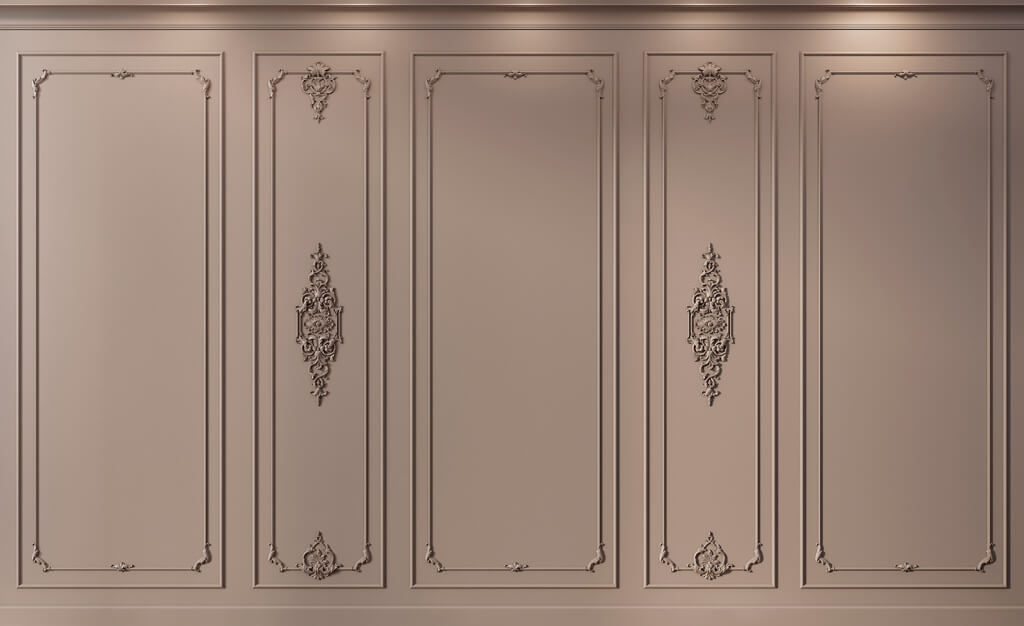
If corner blocks are the nodal points, then central overlays are the accents on straight sections. A long wall with horizontal molding without accents is a monotonous line. The same wall with several central overlays, spaced at equal intervals, becomes a rhythmic composition.
Central decorative elements in the STAVROS catalog:
MLD-1-1 and MLD-1-2 — from 1,550 rubles and from 1,970 rubles. Rectangular overlays with moderate ornamentation. The first option is laconic, for neoclassical style. The second is more saturated, for a classic interior.
MLD-4-1 and MLD-4-2 — from 3,560 rubles and from 4,800 rubles. Medium level of ornamental saturation, look good in combination with medium-height moldings.
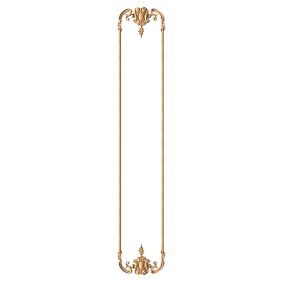
MLD-2-1 and MLD-2-2 — from 4,290 rubles and from 5,730 rubles. Rich relief ornamentation, pronounced plasticity. Suitable for creating accent points on furniture facades — mantel shelves, cabinets, panels.
MLD-3-1 and MLD-3-2 — from 8,470 rubles and from 9,810 rubles. The most complex products in the series: multi-level relief, detailed ornamentation work, significant profile height. These are piece products for high-level projects where the detail must be an 'exclamation point' in the interior's ornamental program.
Side and connecting elements: N.VRS-003 series
Decorative elements N.VRS-003-2L and N.VRS-003-2R (from 1,740 rubles) are side overlays with a directional pattern: left and right. They are mounted on either side of the central overlay or on the sides of the doorway, creating a symmetrical ornamental composition.
Application principle: central overlay MLD-3-1 in the center of the door pediment + side elements N.VRS-003-2L and N.VRS-003-2R symmetrically on the sides = a full-fledged 'portal' above the doorway that looks like the handiwork of an expensive craftsman — at a reasonable cost for the set.
Specialized overlays: N-416, N-383, N-500
These three models are the most elaborate and largest in the molding decor series.
N-500 (from 2,050 rubles) — a special element for molding MLD-003: produced strictly in combination with this molding, the profiles are perfectly matched. This is an example of the catalog's systemic logic: the element is designed not as 'universal,' but as a precise complement to a specific molding line.
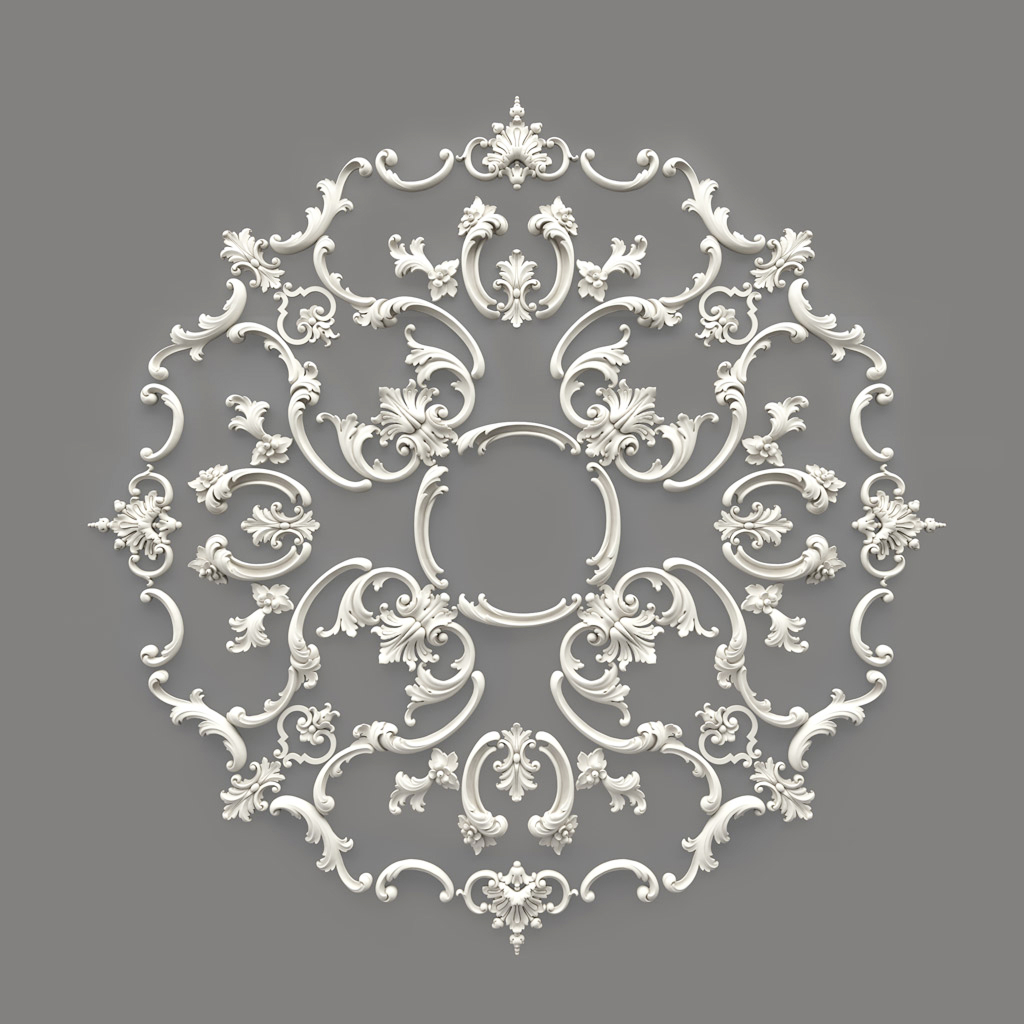
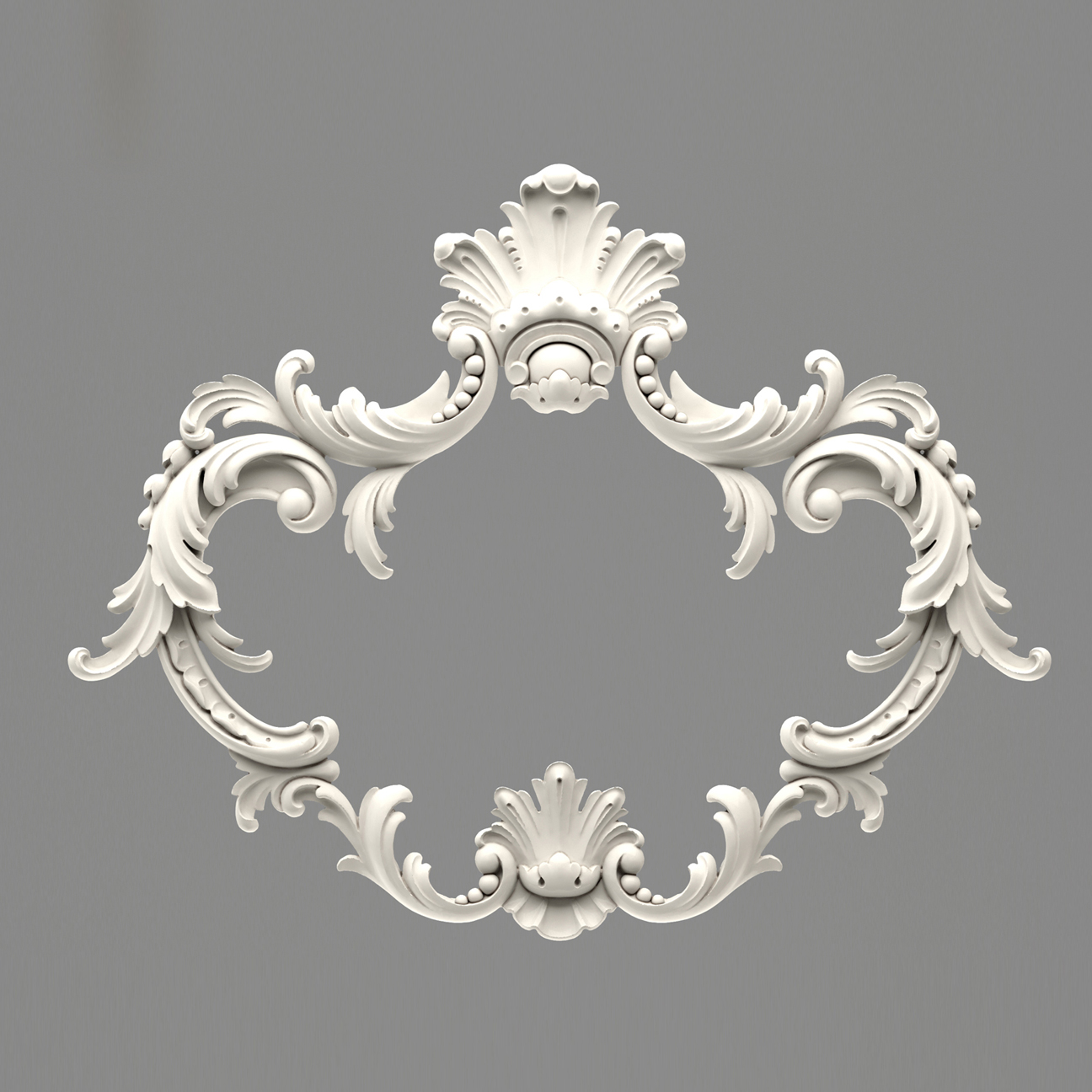
N-416 (from 7,250 rubles) — a large decorative overlay with an exquisite floral pattern. Used as a central accent on a large wall section or as a finishing element in a frame decor system.
N-383 (from 9,980 rubles) — the most elaborate model in the molding decor line. High relief, detailed craftsmanship, significant dimensions. This is a product that becomes an artistic statement in itself.
Types: wooden and polyurethane — what's the difference
Wooden decor: tactile authenticity
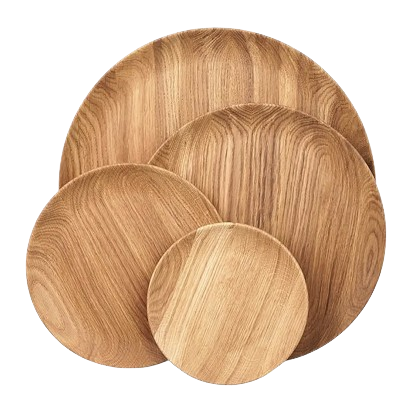
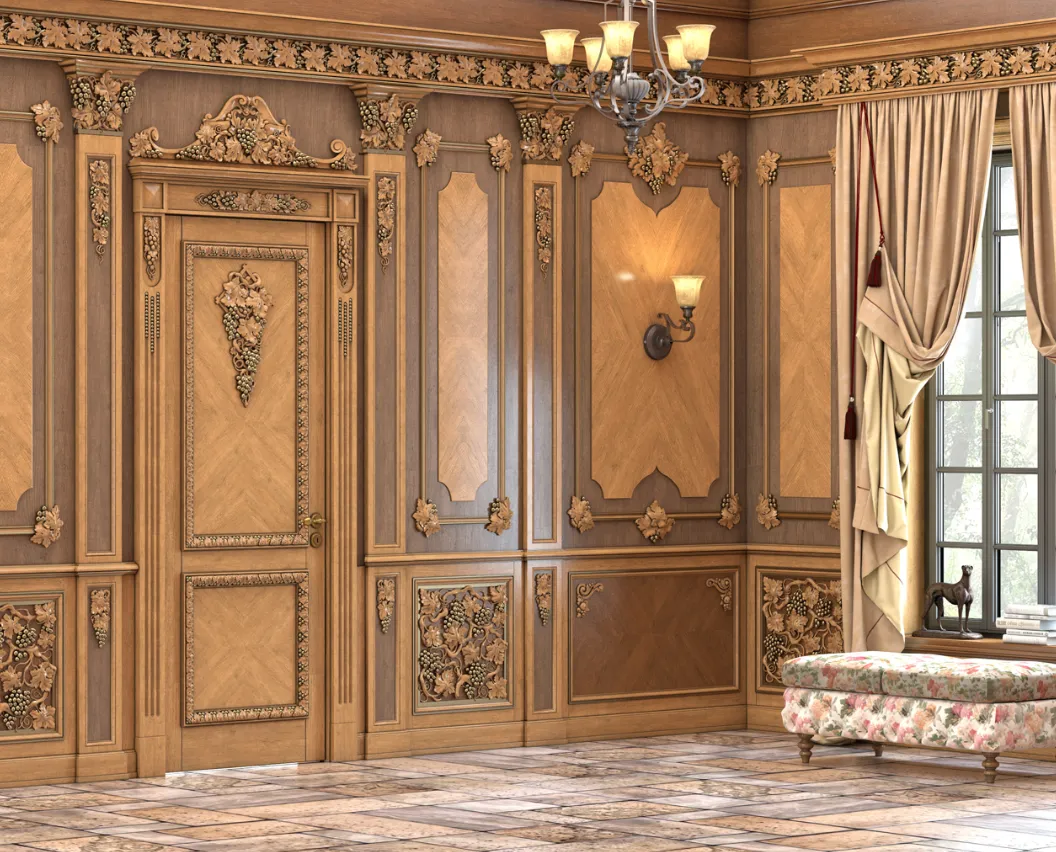
All decorative elements of the MLD series in the STAVROS catalog are made from solid oak or beech. This is a fundamental material choice — not just 'naturalness' as a marketing claim, but specific technical and aesthetic consequences.
Texture. Oak and beech have a pronounced natural texture. With transparent finishes (oil, varnish), the wood grain shows through the ornament, adding vitality and uniqueness to the product. Two identical corner blocks made of oak will never have identical grain patterns—this is their virtue.
Paint adhesion. The open porous surface of solid wood readily accepts stains, oils, and varnishes—without special primers or treatments. Painting wooden decor white yields a deep, 'living' white—not plastic-like, but rich.
Mechanical strength. Oak and beech are hardwoods. An oak corner block withstands accidental impacts and mechanical stress without dents or chips. This is critical for elements at the level of contact with furniture or door panels.
Repairability. A scratched wooden overlay can be sanded and recoated with a new layer of finish. A broken wooden part can be glued with wood glue for an almost invisible seam. Wood can be restored—this is a fundamental difference from any composite material.
Polyurethane decor: lightness and moisture resistance
Polyurethane Decor—this is a fundamentally different material with different strengths. Understanding the difference means making the right choice for a specific task.
Polyurethane does not have a wood texture—its surface is uniform and smooth. This means: for painting white, a polyurethane overlay yields a perfectly even result without the wood grain 'showing through.' For classic white interiors where molded decor should look like plaster—this is an advantage.
Polyurethane is completely moisture-resistant.Decorative stuccoPolyurethane decor is the standard choice for bathrooms, kitchens, and building facades. Wooden decor is not recommended for conditions of constant wetting without special protection.
Polyurethane is significantly lighter than wood with the same dimensions. For large decorative elements on the ceiling or high on a wall, this reduces the load on the fasteners and simplifies installation.
However, there are limitations: polyurethane cannot be sanded during restoration—it lacks a material 'reserve' like wood. It cannot be stained dark with wood stain—the composition does not penetrate the structure. For interiors where the tactile 'liveliness' of natural material is important, polyurethane will always feel like a surrogate.
Comparison in a single table
| Parameter | Wooden decor (oak/beech) | Polyurethane decor |
|---|---|---|
| Texture | Natural, pronounced | Absent, smooth |
| Moisture resistance | Medium (requires coating) | High |
| Weight | Medium | Lightweight |
| Mechanical strength | High | Medium |
| Repairability | High | Low |
| Painting | Stains, oils, varnishes, enamels | Only enamels |
| Application | Interior, furniture, dry rooms | Interiors, facades, wet areas |
| Price | Medium — high | Medium |
How to select a decorative element to match molding by size and profile
Principle of systematic matching
A decorative element is not a standalone product. It only works in combination with molding, and their match must be systematic: in profile height, width, and ornament character.
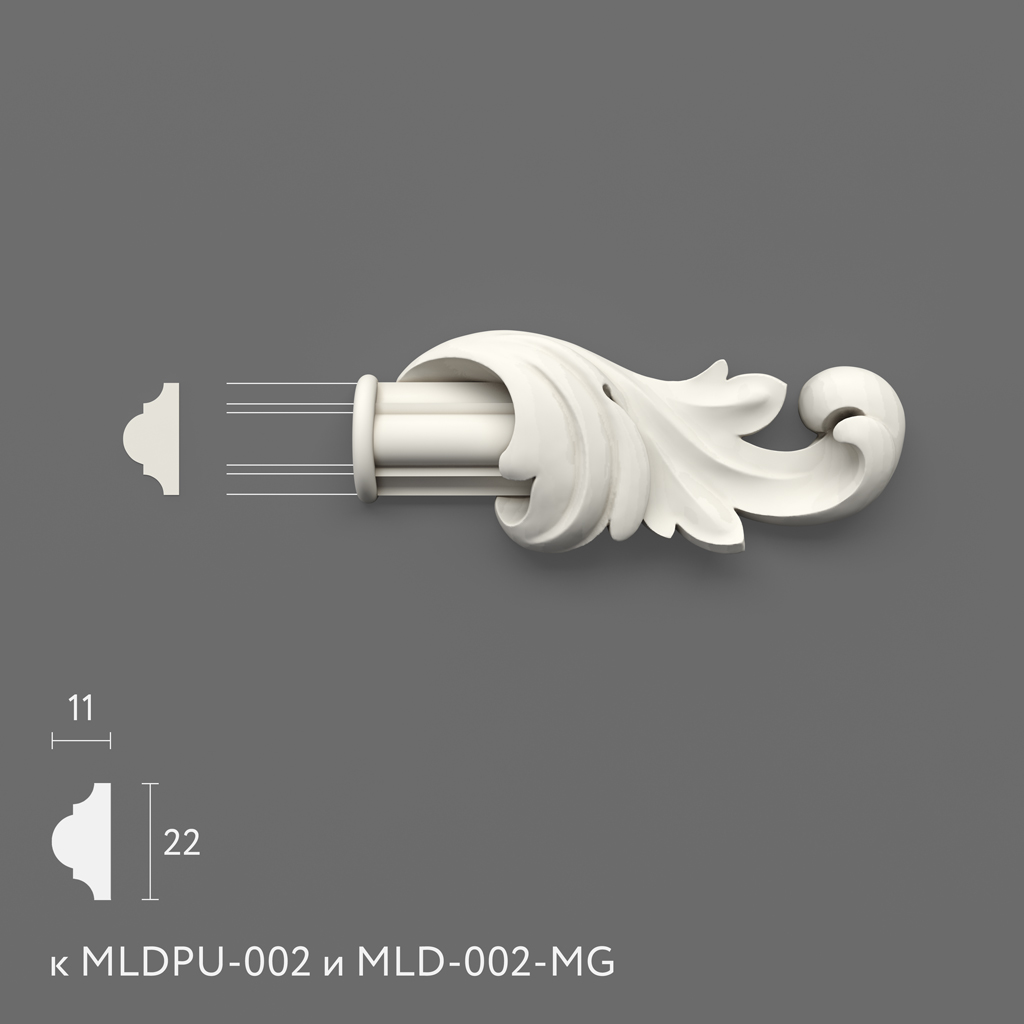
The height of corner blocks and central overlays is designed for specific molding series. In the STAVROS catalog, decor for MLD-1 series moldings is intended for moldings with the first group profile (thinner profile), MLD-2 — for medium moldings, MLD-3 — for large high-level profiles. This is not a convention — it's a structural system: the back side of corner blocks has a recess that replicates the molding profile. The molding fits into this recess, and the joint is concealed behind the block's relief.
That's why the first rule is: choose decorative elements after selecting the molding, not before. The molding determines the size and profile — the element is selected to match it, not vice versa.
How to measure the required element
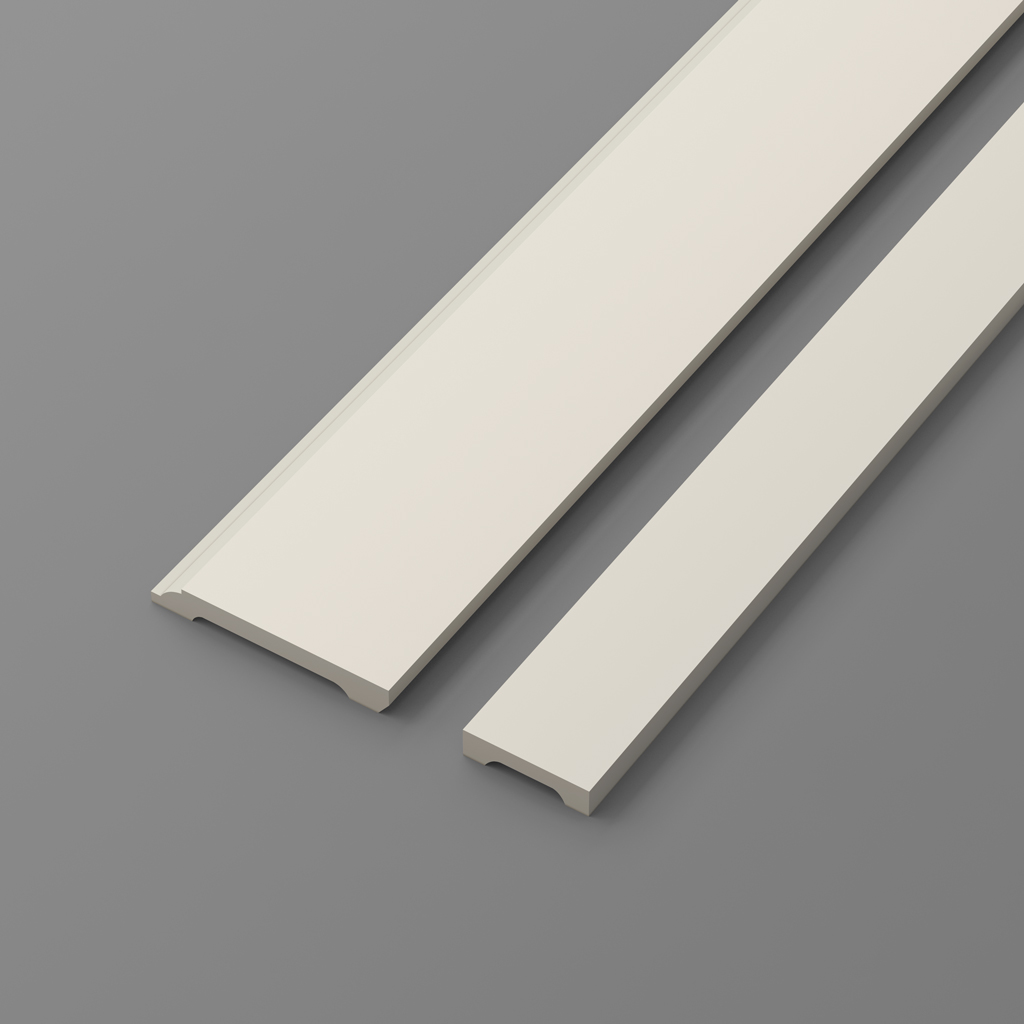
Molding profile height is the distance from the wall to the outer protruding edge of the molding. For thin moldings — 10–20 mm. For medium — 25–40 mm. For large architectural — 50–80 mm and more.
Molding width is the full width of the front side from wall to wall. This parameter determines the width of corner blocks and central overlays.
To determine the correct series of decorative elements, match both parameters with the element's technical specifications listed in the catalog. If you have doubts—ask a STAVROS specialist to select the element: the presence of a selection groove on the back for a specific molding profile will confirm compatibility.
Character of the ornament: unity of decorative language
The second selection criterion is the stylistic unity of the element's ornament and the molding. A molding with a classical floral profile (acanthus leaves, egg-and-dart) and a corner block with a geometric ornament create dissonance, even if the dimensions match perfectly.
Principle: the ornament of the decorative element should either repeat the molding's motif (floral to floral, geometric to geometric) or be neutral—a clean field with clear geometry that 'doesn't clash' with anything.
For monochrome interiors (white molding on a white wall), the discrepancy in ornaments is less noticeable: everything merges into a single relief mass. For contrasting interiors (dark elements on a light wall or vice versa), ornamental unity is crucial: every mismatch is perceived as an error.
Polyurethane decor—advantages and applications
Whypolyurethane decorhas taken such a place in the market
Just 30 years ago, any decor for moldings was exclusively wooden or plaster. Plaster is heavy, fragile, and requires professional installation with reinforcement. Wood is ideal but expensive and needs proper coating in demanding conditions.
Polyurethane offered a third way: the lightness of plaster without its fragility, the precision of ornament reproduction as good as plaster (or better), and moisture resistance absent in both plaster and wood. This combination made polyurethane decor the standard for mass projects: construction companies, design bureaus, furniture manufacturers.
Polyurethane today accounts for most decorative molding in mid- to high-price segment interiors. It is used where speed and precision are needed—without complex surface preparation, special tools, or hiring a plasterer.
Bathrooms and Kitchens: Where Wood Doesn't Work
The most obvious advantagepolyurethane decoris moisture resistance. In bathrooms, kitchens, saunas, and pool areas, decorative elements are constantly exposed to steam and water splashes. Wood in such conditions without reliable moisture protection swells and cracks after just one season.
Polyurethane isn't afraid of this. A decorative polyurethane border at tile level in the bathroom, corner blocks in the kitchen backsplash area, a cornice above the door in a wet room—all of this without any limitations. The only condition: all joints must be filled with moisture-resistant silicone sealant.
Building Facades: Exterior Decor
For facade applications, polyurethane is the only correct choice among lightweight decorative materials. It doesn't absorb water, doesn't deform during freezing and thawing, doesn't fade under ultraviolet light without protective coating (provided it's painted with facade paint), and doesn't create a food source for fungi and mold.
Decorative cornices, friezes, pilasters, and corner elements made of polyurethane are used on the facades of cottages, administrative buildings, and shopping centers. They are glued with facade polyurethane adhesive or mounted on special dowels. Service life with proper coating is over 20 years without restoration.
Furniture Manufacturing: Scale and Reproducibility
In furniture manufacturing, polyurethane decor is used where precise reproducibility is needed in large volumes. The production of case furniture—kitchens, cabinets, living room sets—requires hundreds of identical overlays. Wooden overlays in large volumes are expensive. Polyurethane ones are cheaper and completely identical from piece to piece.
However, for top collections and designer furniture, wooden decor remains the standard: its tactility, texture, and possibility of transparent finishing have no polyurethane equivalent.
Installation of corner blocks and joint elements
Preparation: precision in, precision out
Quality installation of decorative elements for moldings begins with precise marking. The corner block is installed first—it sets the reference points for the entire system. Moldings are mounted from block to block, not the other way around.
Work sequence:
-
Mark the position of corner blocks in all corners along the perimeter of the room or on the furniture facade
-
Check the horizontal level with a spirit level—this is critical for horizontal moldings
-
Apply adhesive to the back surface of the corner blocks
-
Press and hold for 30–60 seconds
-
Measure the distance between blocks—cut the molding exactly to size
-
Apply adhesive to the molding, join it to the side faces of the blocks
Adhesive: what to choose for wood, what for polyurethane
For wooden corner blocks and overlays mounted on wooden bases: carpenter's PVA D3 or D4 (moisture-resistant). Open time — 5–10 minutes. Pressure holding time — 30–60 minutes. Final strength — after 24 hours.
For mounting wooden elements on walls made of drywall, MDF, or plastered surfaces: water-based liquid nails without solvents. Additionally, fixation with thin finishing nails until the adhesive is completely dry is recommended.
For polyurethane elements: specialized acrylic adhesive for polyurethane. Adhesives with solvents are strictly prohibited — they destroy the structure of polyurethane.
Sealing joints: the final touch that makes all the difference
Even with perfectly trimmed moldings and precisely installed corner blocks, micro-gaps remain at the joints: 0.2–0.5 mm. Are they visible? Under paint — no, if sealed. Without sealing — yes, especially with side lighting.
Tools: white acrylic sealant, a spatula, and a damp finger. Apply a thin strip of sealant along the joint, smooth it with your finger, remove excess with a slightly damp cloth. After drying — light sanding with a 320-grit sponge, painting.
For wooden products that will be covered with clear varnish — wood putty matching the wood tone. White acrylic sealant under clear varnish will appear as a whitish spot.
Mounting on furniture fronts
Decorative elements of the MLD series are actively used as decor for cabinet furniture fronts: overlays in the center of cabinet doors, corner blocks on front framing, side overlays N.VRS-003 around the perimeter of the frame. This transforms a standard flat MDF front into a front with relief decor — visually much more expensive and interesting.
Installation on furniture fronts: special wood glue + finishing nails 20 mm long every 15–20 cm. Nails are countersunk with a nail setter, holes are filled for painting. For fronts with transparent finish — glue only, no nails: nail heads will be visible.
FAQ: Answers to popular questions
How to determine which corner block is needed for my molding?
The main parameters are the width and height of the molding profile. The back side of the MLD-series corner blocks has a recess for a specific profile. If you have STAVROS molding — the series of the decorative element matches the molding series: MLD-1 for moldings of the first group, MLD-2 and MLD-3 — for larger profiles.
Can wooden decorative elements be combined with polyurethane moldings?
Technically — yes, if dimensions match. Stylistically — not recommended in interiors with transparent finish (wood under varnish + polyurethane under enamel look like different systems). With monochrome painting in white, the difference is minimized.
How many corner blocks are needed for one room with molding around the perimeter?
A standard rectangular room has 4 internal corners. Each corner — 2 blocks (left and right). Total: 8 corner blocks per room. If there are external corners (protruding columns, arches), blocks for external corners are added — they have different geometry, do not confuse when ordering.
Is primer needed before installing decorative elements for moldings on the wall?
Yes. Deep penetration primer based on the surface (wall, drywall, plaster) is applied 12–24 hours before installation. This significantly improves adhesive adhesion and prevents future detachment of elements.
Can wooden decorative elements be painted gold or bronze?
Yes. Acrylic metallic paints (gold, bronze, silver) adhere well to wooden surfaces. For a more saturated effect: base — dark acrylic (dark brown or black), finish — a thin layer of gold paint, applied with an almost dry brush only to the raised parts of the relief.
How do models with the index '-1' and '-2' differ in the MLD series?
The indices '-1' and '-2' denote different degrees of ornamental saturation for the same size. The '-1' model is more concise, geometrically pure. The '-2' model is richer, with floral or mixed motifs. The choice depends on the overall character of the interior: neoclassical tends towards '-1', classic and baroque — towards '-2'.
Is it necessary to treat the back side of wooden overlays before installation?
It is not necessary and not recommended. The back side — exposed wood — provides maximum adhesion for the glue. Any coating (varnish, paint, oil) will create a barrier and reduce bonding. Coating is applied only to the front surface — after installation.
About the company STAVROS
Good decor is a system. Not a set of beautiful details, but a system in which each element knows its place, its size, and its partner. This is precisely the logic with which the STAVROS catalog is built.
STAVROS producesmolding decorative elementsmade of solid oak and beech, as well as polyurethane decor in a wide range. Corner blocks, central overlays, side inserts — everything is developed as a unified system with compatible profiles and coordinated ornaments. Over 30 models of decor for moldings, over 200 items of polyurethane stucco decor, price range from 500 to 9,980 rubles — this is the ability to solve any design task within one catalog.
Two quality levels — Standard and Prestige — allow you to precisely choose the product for the task: for painting or for transparent finishing. Stock program — shipment from 1 piece on the day of order. Delivery throughout Russia and CIS countries.
STAVROS is a manufacturer that understands: a detail is not a trifle. A detail is where everything is decided.