





















Article Contents:
- Historical Context: Plaster Molding as a Symbol of Luxury
- From antiquity to the present day
- Why Plaster Was the Only Choice
- Polyurethane: The Technological Breakthrough of the Late 20th Century
- The Birth of Polymer Molding
- Production Technology: From 3D Model to Finished Product
- Comparison Table: Plaster vs. Polyurethane
- Where Plaster is Irreplaceable: Three Key Niches
- Restoration of Historical Objects
- Author's Exclusive Decor
- Prestige Projects with Unlimited Budget
- Where Polyurethane Wins: Practicality and Versatility
- Wet Rooms: Bathrooms, Showers, Pools
- Facades: Aggressive Operating Environment
- Stretch and Suspended Ceilings
- Budget Projects: Affordability Without Losing Aesthetics
- Detailed Comparison by Key Parameters
- Weight and Load on Structures
- Moisture Resistance: The Deciding Factor for Bathrooms and Facades
- Installation: Simplicity vs. Professionalism
- Durability: What Lasts Longer
- Aesthetics and Detailing: Myths and Reality
- Can Polyurethane Imitate Plaster?
- Painting and Decorating Possibilities
- Eco-Friendliness and Safety: What is Safer for Health
- Plaster – A Natural, Breathable Material
- Polyurethane – An Inert Polymer After Polymerization
- Frequently Asked Questions
- Conclusion: A Rational Choice for the Task
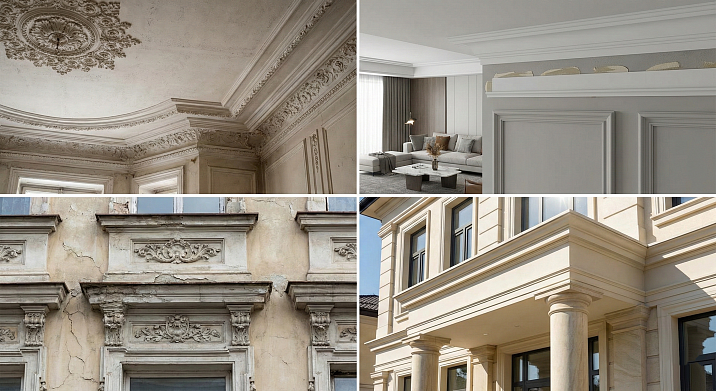
The question of choosing a material for decorative molding arises for everyone who strives to create an interior with classical features or decorate a house facade with architectural elements.Molding: Plaster or Polyurethane — Which is Better?This question has no definitive answer because both materials have their own advantages and limitations. Plaster is a classic, tested by centuries, the material of palace interiors, sculptural molding, and author's decor. Polyurethane is a modern technology that has made quality molding affordable, easy to install, durable, and moisture-resistant. The choice depends on operating conditions, budget, aesthetic requirements, and project timelines. In this article, we will analyze both materials in detail, compare them by key parameters, and determine the optimal application areas for each.


Historical Context: Plaster Molding as a Symbol of Luxury
From antiquity to the present day
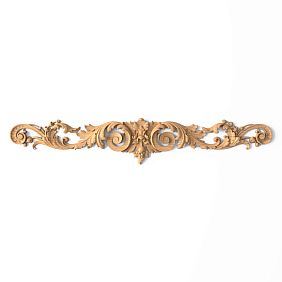
Plaster molding has adorned interiors for over two millennia. The ancient Romans used plaster to decorate baths, villas, and temples. During the Renaissance, Italian masters created the most complex ceiling compositions from plaster – coffers, rosettes, friezes with floral ornaments. Baroque and Rococo brought the art of plaster molding to its apogee – lush capitals, volutes, garlands of flowers and fruits, putti, and masks turned palace interiors into frozen music of forms.
Russian imperial residences — the Winter Palace, Tsarskoye Selo, Peterhof — showcase masterful plasterwork. Ceilings 4-6 meters high are adorned with multi-tiered cornices, large rosettes 1.5-2 meters in diameter, and bas-reliefs depicting scenes from classical mythology. All of this was created by hand — sculpting, molding, installation, finishing, gilding. The work of dozens of craftsmen over months and years.
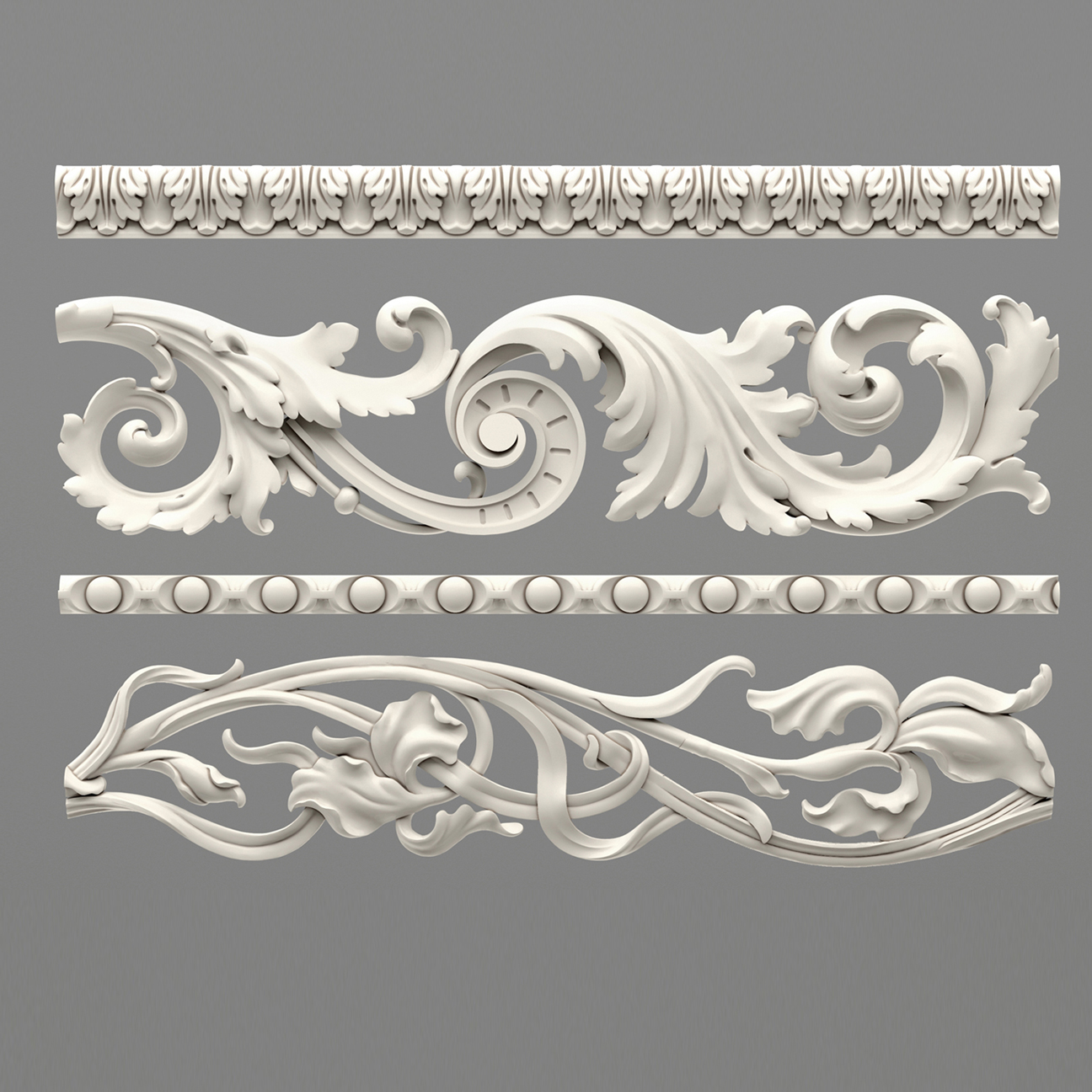
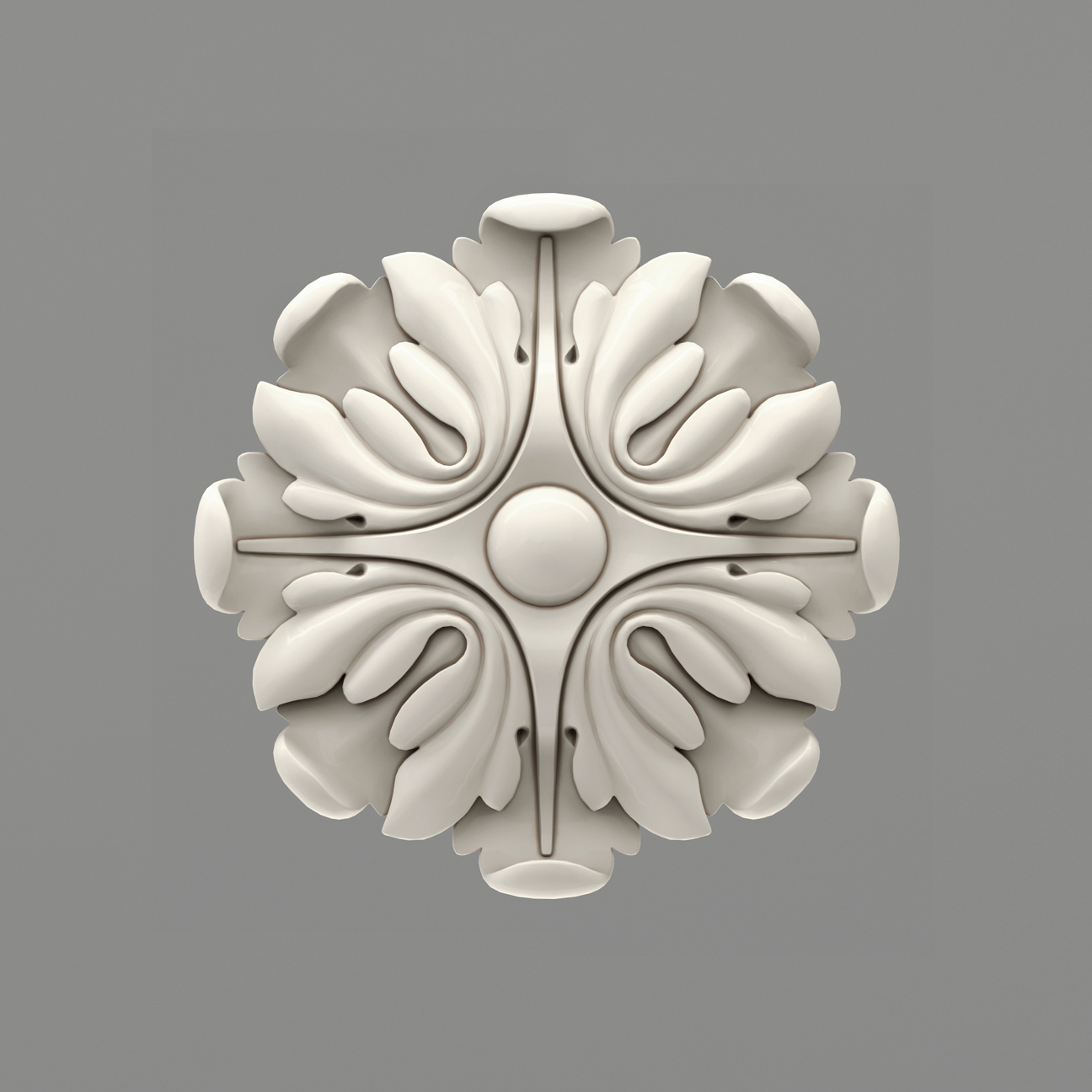
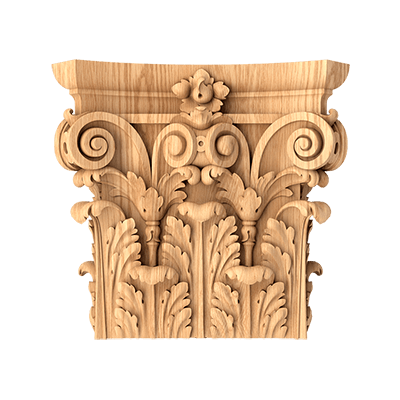
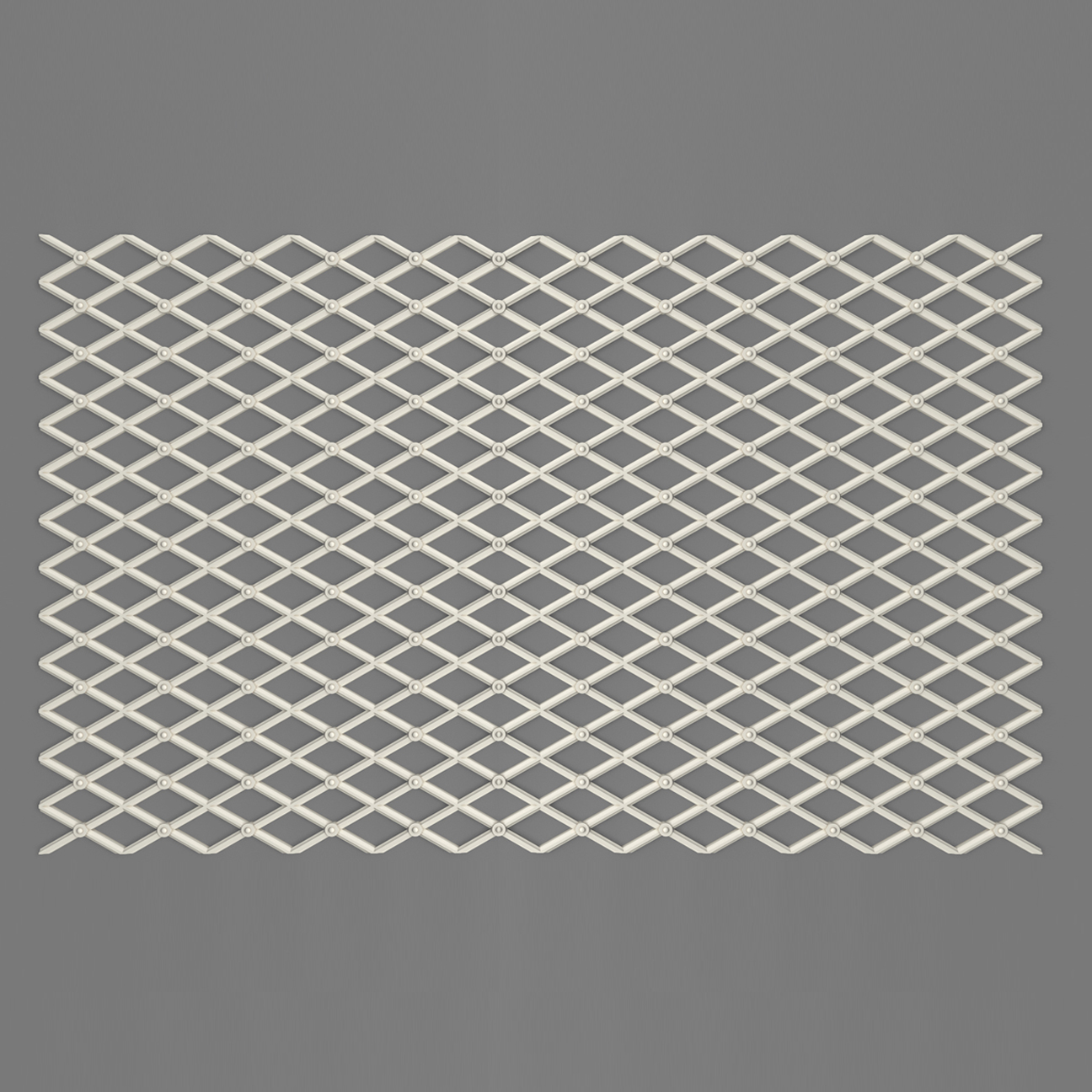
Our factory also produces:

Why plaster was the only choice
Until the 20th century, there were practically no alternatives to plaster. Wood was used for carved elements, but it is more expensive, harder to work with, and susceptible to moisture and fire. Papier-mâché was used for lightweight decorative details but lacked strength. Plaster was the optimal material — affordable, pliable when wet, hard after setting, capable of reproducing the finest details.
The technology of casting plaster moldings has been perfected over centuries. A craftsman creates a clay model of the element, a mold (plaster or silicone) is taken from it, a plaster solution (plaster + water) is poured into the mold, after setting (20-40 minutes) the element is extracted, dried for several days, finished by hand (seam cleaning, detail refinement), and mounted on the ceiling or wall. This is labor-intensive, but the result is unique products of the highest detail.
Get Consultation
Polyurethane: a technological breakthrough of the late 20th century
The birth of polymer moldings
Polyurethane as a material for decorative elements appeared in the 1970s in the USA. The chemical industry learned to create two-component polyurethane systems that, when mixed, form a dense, strong, lightweight polymer. The first polyurethane moldings and cornices were produced for the American housing market — the country was actively building suburban homes in Neocolonial and Victorian styles, requiring decor that imitated classical moldings but was affordable and easy to install.
European manufacturers (Belgium, Germany, Italy) adopted the technology in the 1980s-1990s, adapted it to European standards, and created rich collections of profiles. By the 2000s, polyurethane moldings became a global trend — they are sold on all continents and are present in the interiors of apartments, private houses, hotels, restaurants, and offices.
Production technology: from 3D model to finished product
Modern productionpolyurethane moldingbegins with a digital 3D model. A designer creates a cornice profile, rosette shape, or overlay ornament in 3D modeling software. The model is sent to a CNC milling machine, which cuts the master model from wood or plastic with an accuracy of 0.1 mm. A silicone mold is taken from the master model, into which polyurethane will be poured.
Casting occurs as follows: two polyurethane components (polyol and isocyanate) are mixed in an exact proportion, the mixture is poured into the silicone mold, a chemical polymerization reaction occurs, and the material hardens in 5-15 minutes. The finished element is extracted, cleaned, primed, and packaged. The entire cycle from pouring to packaging takes 30-60 minutes — hundreds of times faster than producing plaster moldings.
The quality of polyurethane is determined by its density. Cheap products have a density of 150-200 kg/m³ — they are lightweight but brittle, with unclear relief. High-quality moldings (like those from STAVROS) have a density of 280-350 kg/m³ — they are strong, elastic, reproduce the finest details of the ornament, and last for decades.
Comparison table: plaster vs. polyurethane
| Parameter | Plaster molding | Polyurethane molding |
|---|---|---|
| Weight | 800-1200 kg/m³, very heavy, requires reinforced fastening | 280-350 kg/m³, 3-4 times lighter than plaster |
| Moisture resistance | Absorbs moisture, deteriorates in bathrooms and on facades | Completely moisture-resistant, does not absorb water |
| Material Price | 1500-5000 rub/m for standard elements, 5000-20000 rub/m for custom designs | 300-1500 rub/m for standard elements |
| Installation difficulty | Requires professional skills, reinforcement, lengthy fixation | Simple DIY installation, adhesive sets in 2-4 hours |
| Durability | 50-100+ years with proper use in dry rooms | 20-40 years in any conditions, including damp areas |
| Detailing | Maximum, manual refinement of small details is possible | High, depends on mold quality, manual refinement is impossible |
| Impact Resistance | Brittle, chips easily upon impact | Elastic, withstands moderate impacts without damage |
| Repairability | Easily restored — chips are filled with plaster, sanded | Difficult to repair — chips are visible, element replacement required |
| Ecological | 100% natural material, breathable, hygroscopic | Inert polymer, does not release substances after polymerization |
| Paintability | Can be painted with any paints, patina and gilding are possible | Can be painted with water-based paints (acrylic, latex), not compatible with solvents |
| Setting time during installation | 24-48 hours for full setting, element support required | 2-6 hours for adhesive setting, further work possible the next day |
This table clearly demonstrates thatGypsum stucco and polyurethane stucco— materials with different application profiles. Gypsum excels in durability, detail, ability to create unique elements, and eco-friendliness. Polyurethane surpasses gypsum in weight, moisture resistance, price, ease of installation, and versatility of application.
Where gypsum is irreplaceable: three main niches
Restoration of historical objects
Architectural monuments of the 18th-19th centuries, historical mansions, palace interiors, estates — only gypsum stucco is used in them. This is a requirement of restoration standards and the logic of preserving authenticity. The original gypsum stucco by Rastrelli or Quarenghi cannot be replaced with a polyurethane imitation — this would distort the historical value of the object.
Restorers create gypsum copies of lost or damaged elements by taking molds from preserved fragments. Each rosette, each modillion of the cornice is reproduced with jewelry precision, then mounted in historical locations, tinted to match the color of the surrounding stucco. The work is meticulous, slow, expensive, but only in this way is the authenticity of the historical interior preserved.
Author's exclusive decor
If a project requires unique elements not found in catalogs, plaster is the best choice. A sculptor creates an original model by hand from clay or plasticine, a mold is taken from it, and plaster copies are cast. You can create a rosette with an author's ornament, including the owner's initials, a family crest, symbols related to the family's history. You can sculpt a capital of non-standard shape, a bas-relief with a portrait, a frieze with a unique plot.
Plaster is plastic—the master can make changes during the sculpting process, add details, adjust proportions. Polyurethane does not offer such freedom—the element is cast from a mold; it cannot be changed after removal. Author's plaster stucco is art, a unique piece that makes the interior unique.
Status projects with unlimited budget
There is a category of clients for whom price and speed are not important, but status, prestige, and exclusivity are. Residences, penthouses, de luxe class apartments, private mansions with an area of 500+ m²—in such properties, the use of plaster stucco emphasizes the level. It is expensive, but it is a symbol: we do not save, we choose the best, tested for centuries.
Plaster stucco in an elite interior is often complemented by hand-applied patina, gilding (gold leaf, imitation gold leaf), and painting. Each element becomes a work of decorative art. The cost of such decor can be 10-20% of the total renovation cost, but the result justifies the investment—the interior looks like a museum hall, the space is filled with beauty that does not become tiresome for decades.
Where polyurethane wins: practicality and versatility
Wet areas: bathrooms, showers, swimming pools
Plaster is categorically unsuitable for wet areas. It is hygroscopic—it absorbs moisture from the air, swells, loses strength, becomes covered with mold and fungus, cracks, and crumbles. Plaster stucco in a bathroom turns into a sad sight after a year or two—dark mold spots, peeling fragments, deformed elements.
Polyurethane is absolutely moisture-resistant. It does not absorb water (water absorption less than 1%), does not change size or shape at 100% humidity, and does not create an environment for the development of mold and fungus.Polyurethane molding on bathroom walls and ceilinglasts for decades without changes. Cornices, moldings, rosettes, decorative panels — all of these can be safely installed in the shower area, above the bathtub, and in the sink area.
Important nuance: polyurethane molding in wet areas must be installed using moisture-resistant adhesive (polyurethane or MS-polymer), joints must be sealed with silicone sealant (not acrylic!), and painted with moisture-resistant paint in 2 coats. Then the decor will last 20-30 years without problems.
Facades: aggressive operating environment
Facade molding is subjected to extreme impacts — rain, snow, frost down to -40°C, heat up to +40°C, ultraviolet radiation, wind with dust and sand, mechanical impacts (hail, tree branches, children's balls). Plaster cannot withstand such conditions. Even if plaster elements are painted with facade paint, moisture penetrates through microcracks, freezes inside, expands, and destroys the structure. The service life of plaster facade molding is 5-10 years, after which replacement is required.
Polyurethane is made for facades. Dense polymer with UV stabilizers does not degrade under the sun, does not absorb water, does not crack in frost, and withstands impacts. Facade polyurethane molding is painted with elastic facade paint (acrylic or silicone), which breathes but does not allow moisture inside. Service life is 20-30 years, with periodic repainting (every 7-10 years) — up to 50 years.
Important: facade polyurethane must have a density of at least 300 kg/m³ and contain UV stabilizers. Cheap interior polyurethane on a facade will yellow, crack, and last 3-5 years. High-quality facade molding (like STAVROS) is made from a special compound optimized for exterior use.
Stretch and suspended ceilings
Polyurethane molding on a stretch ceiling— a standard solution used in 90% of projects with stretch systems. Stretch fabric — a thin PVC film 0.15-0.25 mm thick — cannot support the weight of a plaster cornice. Even if mounting blocks are installed behind the stretch fabric to attach plaster, the weight creates tension, the fabric may sag, deform, or in the worst case — tear.
Polyurethane cornice weighs 3-4 times less than plaster. A cornice 100 mm wide, 2 meters long made of polyurethane weighs 0.8-1.2 kg, made of plaster — 3.5-5.0 kg. This is a critical difference. A polyurethane cornice is attached to the wall 3-5 cm below the level of the stretch ceiling, does not load the fabric, and creates a smooth transition from wall to ceiling. An LED strip is often installed between the cornice and the ceiling — hidden lighting that creates a floating ceiling effect.
Suspended drywall ceilings also prefer lightweight molding. A 12.5 mm thick drywall sheet can withstand a distributed load of 15-20 kg/m², but a local load from a heavy plaster rosette can cause sagging and cracking. A polyurethane rosette is attached directly to the drywall with mounting adhesive without additional reinforcement—it weighs 0.5-2.0 kg (depending on diameter), which is safe for the ceiling.
Budget projects: affordability without compromising aesthetics
Price is the determining factor in 70-80% of cases. A ceiling cornice 100 mm wide: plaster costs 1500-2500 rub/m plus installation 800-1200 rub/m, total 2300-3700 rub/m. Polyurethane costs 400-700 rub/m plus installation (if you do it yourself—free, if you hire a professional—300-500 rub/m), total 400-1200 rub/m. Savings of 2-5 times.
For a 70 m² apartment with a ceiling perimeter of 35 meters, the difference will be: plaster cornices will cost 80,000-130,000 rubles, polyurethane—14,000-42,000 rubles. The saved 40,000-90,000 rubles can be invested in other renovation items—quality wallpaper, parquet, plumbing, furniture.
Important: saving does not mean compromising on aesthetics. High-quality polyurethane molding (STAVROS, Europlast, Orac Decor) is visually indistinguishable from plaster. Ornament detailing, line clarity, ability to paint, patinate, gild—all this is available for polyurethane. Only professionals can tell the difference upon close inspection or by touch (polyurethane feels slightly warmer, plaster is cooler).
Detailed comparison by key parameters
Weight and Load on Structures
Plaster is one of the heaviest decorative materials. Density of 800-1200 kg/m³ (1.5-2 times heavier than concrete) means a cornice 150 mm wide, 2 meters long weighs 6-9 kg. A ceiling rosette 80 cm in diameter, 4 cm thick weighs 8-12 kg. A column capital 30 cm high weighs 15-25 kg. This is a serious load that requires reliable fastening.
Installing plaster molding on a ceiling requires anchors (metal rods that pass through the element and penetrate the concrete slab by 5-8 cm) or reinforcement (metal mesh glued to the back of the element and attached to the ceiling with screws). Without such reinforcement, a plaster cornice or rosette can detach and fall—a risk to people, especially in children's rooms, bedrooms.
Polyurethane is 3-4 times lighter than plaster (density 280-350 kg/m³). A similar cornice 150 mm wide, 2 meters long weighs 1.8-2.5 kg. A rosette 80 cm in diameter weighs 1.5-2.5 kg. A capital 30 cm high weighs 3-5 kg. Such mass does not require special fasteners—mounting adhesive on a polyurethane or acrylic base, applied to the back of the element in a continuous layer or strips, is sufficient.
The lightness of polyurethane opens up possibilities unavailable to plaster. You can install molding on 12.5 mm thick drywall partitions without risk of deformation. You can attach decor to stretch ceilings (cornice on the wall below ceiling level). You can create multi-level compositions on the ceiling without worrying about overloading the structure.
Moisture resistance: a decisive factor for bathrooms and facades
Gypsum is a hygroscopic material. This means it absorbs moisture from the air, retains it in its pores, and dries slowly. At 70-80% air humidity (normal humidity in a bathroom after a shower), gypsum can absorb up to 5-7% water by its own weight. At 100% humidity (steam room, Turkish bath), gypsum can absorb up to 15-20% water.
What happens when gypsum gets wet? The material swells (increases in volume by 0.5-1.0%), loses compressive and flexural strength (up to 30-40% loss), and becomes a medium for mold and fungus growth. Fungal spores present in the air of any living space, given moisture and organic matter (and gypsum contains micro-impurities of organic substances), begin to actively multiply. Black, green, and gray mold spots appear on the surface of gypsum stucco. They cannot be removed—the fungus penetrates deep into the material.
Polyurethane is hydrophobic—it repels water. Water absorption of high-quality polyurethane is less than 0.5-1.0% (10-20 times lower than gypsum). Even when fully immersed in water for 24 hours, a polyurethane element absorbs minimal moisture, does not change dimensions, and does not lose strength. After removal from water, it dries within 2-3 hours at room temperature.
Polyurethane does not create conditions for mold—it is an inert polymer that contains no nutrients for fungi. Even if a fungal spore lands on the surface of polyurethane stucco, it cannot anchor or germinate—the material provides no nutrition or moisture. This is critically important for bathrooms, saunas, swimming pools, kitchens, facades—anywhere with high humidity.
Installation: simplicity versus professionalism
Installing gypsum stucco is a job for professionals. This is due to the weight of the elements, the need for precise joint fitting, and specific fastening techniques. The process looks like this:
-
Marking installation locations with high precision (a deviation of more than 2-3 mm over a 2-meter cornice length creates visible defects).
-
Surface preparation—priming; in the case of a ceiling—installing embedded blocks or anchors.
-
Fitting elements—cutting at a 45° angle for corner joints, cleaning cut areas.
-
Applying adhesive compound (gypsum paste, alabaster) to the back of the element and the surface.
-
Installing the element, leveling, temporary fixation with props and spacers.
-
Waiting for the adhesive to set (24-48 hours, during which the element must not be touched).
-
Removing temporary supports, sealing joints with gypsum paste, sanding, priming, painting.
The entire process from marking to painting takes 3-5 days per room. Mistakes are costly — an incorrectly installed gypsum element is difficult to remove (it may break), and redoing the work increases costs.
Installation of polyurethane molding is accessible to a DIYer with basic skills. The process is simplified:
-
Marking installation locations with a pencil or chalk line.
-
Preparing elements — cutting with a miter box or miter saw at the required angle (45° for corners, 90° for joining strips).
-
Applying adhesive (polyurethane- or acrylic-based construction adhesive from a tube or bucket) to the back of the element in a strip or zigzag pattern.
-
Pressing the element to the wall or ceiling, leveling, holding by hand for 2-3 minutes until the adhesive initially sets.
-
If necessary, temporary fixation with painter's tape or thin nails (removed after 4-6 hours).
-
After 24 hours — sealing joints with acrylic sealant, painting.
The entire process from marking to painting takes 1-2 days. Mistakes are easily corrected — the element can be carefully removed (the adhesive has not yet reached full strength in the first 2-4 hours), trimmed, and reinstalled. Savings on installation when doing it yourself amount to 300-800 rubles/m (the cost of professional installer services).
Durability: what lasts longer
Gypsum is a material with a century-long history of use. Gypsum stucco from 18th-century palaces has survived to this day in good condition (provided dry indoor climate, regular maintenance, and absence of mechanical damage). The service life of gypsum under ideal conditions is practically unlimited — 100, 200, 300 years. The material does not degrade over time, does not change properties, and does not lose strength.
But that's under ideal conditions. In reality, gypsum stucco faces risks: leaks from upper floors (in apartment buildings), condensation (in poorly heated rooms), mechanical impacts (when moving furniture, children playing), vibrations (in houses near busy roads, close to subways). Each such impact reduces the service life. The actual durability of gypsum stucco in an apartment is 50-80 years, after which restoration or replacement is required.
Polyurethane is a young material; the first products appeared 40-50 years ago. Durability studies are conducted in accelerated mode (climate chambers where the material is subjected to heating-cooling, wetting-drying cycles). Results show that high-quality polyurethane in interiors lasts 30-50 years, on facades 20-30 years without noticeable degradation. After this period, yellowing is possible (if no UV stabilizers were used), loss of elasticity, and appearance of microcracks in stress areas.
Actual durability depends on conditions. Polyurethane stucco in a dry, heated interior without direct sunlight will last 40-60 years. On a south-facing facade (maximum UV exposure) without regular repainting — 15-25 years. In a bathroom with constant humidity but without direct water contact — 25-35 years.
Aesthetics and detailing: myths and reality
Can polyurethane imitate gypsum
One common argument against polyurethane is the claim that it looks cheap, artificial, and cannot convey the subtleties of plaster stucco. This was true for early polyurethane products of the 1980s-1990s, when casting technologies were imperfect, molds wore out quickly, and detail suffered.
Modern high-quality polyurethane (density 280-350 kg/m³, cast in high-resolution silicone molds taken from carved wooden master models) reproduces details with an accuracy of 0.2-0.3 mm. This means that acanthus leaves on a capital, volutes on a console, and dentils (teeth) on a cornice are reproduced with the same clarity as in the original plaster.
Visually, distinguishing quality polyurethane stucco from plaster from a distance of more than 1-2 meters is practically impossible. An ordinary person, not a specialist, will not notice the difference. Differences become apparent upon close inspection and tactile contact: plaster feels colder to the touch (thermal conductivity 0.35-0.45 W/(m·K)), polyurethane feels warmer (thermal conductivity 0.10-0.15 W/(m·K)). Plaster is matte, slightly rough (even after painting), polyurethane is smooth, more uniform.
There are elements where polyurethane surpasses plaster. For example, flexible moldings for finishing arched openings, curved walls, round columns. Plaster is not flexible—it can only be bent in a wet state during molding; after setting, it is hard. Polyurethane is produced in flexible versions (special composition with increased elasticity), which bend to a radius from 50 cm to several meters, retaining their shape after installation.
Painting and Decoration Possibilities
Both plaster and polyurethane can be painted, patinated, gilded, creating various decorative effects. But there are nuances.
Plaster absorbs paint—it is a porous material. The first coat of paint sinks into the pores, requiring 2-3 coats for even coverage. However, plaster is compatible with all types of paint: water-based (acrylic, latex), alkyd (enamels), oil-based. Wax patinas, glazes, shellacs can be applied—plaster accepts everything.
Polyurethane has a closed, smooth surface; paint does not absorb. One or two coats of paint are sufficient for dense, opaque coverage. But polyurethane is only compatible with water-based paints (acrylic, latex, water-dispersible). Solvent-based paints (alkyd, oil, nitro) soften polyurethane, causing deformation and loss of strength. This limitation must be remembered.
Patination (creating an aging effect with dark accents in the recesses of the ornament) works equally well on plaster and polyurethane. Technique: a base coat of light paint, then applying dark paint diluted with glaze into the recesses of the relief with a brush or sponge, removing excess with a cloth. The result is depth, volume, and the effect of centuries-old patina.
Gilding (applying gold leaf, imitation gold leaf, or gold paint to the protruding parts of the relief) creates luxury, shine, and a palatial atmosphere. On plaster, gilding is traditionally done with gold leaf on a special adhesive base (mordant)—a labor-intensive technique requiring skill. On polyurethane, golden acrylic metallic paint is more often used—applied with a brush to the protrusions, creating a convincing imitation of gold in 1-2 hours of work.
Eco-friendliness and safety: what is safer for health
Gypsum is a natural breathable material
Gypsum (chemical formula CaSO₄·2H₂O) is a natural mineral that is quarried, fired at a temperature of 150-180°C, and ground into a powder. When mixed with water, gypsum sets in 10-40 minutes, crystallizes, forming a strong stone. Gypsum contains no synthetic additives, solvents, or volatile substances.
Gypsum is hypoallergenic — it does not cause allergic reactions, does not emit odors, and is safe for people with asthma, sensitive skin, and children. Gypsum is vapor-permeable (breathable) — it allows water vapor to pass through and participates in regulating indoor humidity. When humidity increases, gypsum absorbs excess moisture; when it decreases, it releases it. This creates a comfortable microclimate.
Gypsum is non-combustible — fire hazard class KM0 (non-combustible). In a fire, gypsum does not burn, does not emit toxic gases, and does not melt. Moreover, when heated above 100°C, gypsum releases crystallization water (about 20% of its mass), which creates a cooling effect and slows the spread of fire. This is important for evacuation routes and public buildings.
Polyurethane is an inert polymer after polymerization
Polyurethane is a synthetic polymer formed by the chemical reaction of a polyol and an isocyanate. Chemical substances are used in the production process, some of which are toxic (isocyanates irritate the respiratory tract). However, this is dangerous only for production workers, who must use protective masks and ventilation.
After polymerization (24 hours after casting), polyurethane is completely inert. It does not emit volatile substances, has no odor, and is safe for residential premises. Certificates of conformity and sanitary-epidemiological reports confirm that polyurethane molding is permitted for children's rooms, bedrooms, kitchens, and medical institutions.
Polyurethane does not breathe — it does not allow water vapor to pass through. This is not a problem for small elements (cornices, moldings occupy 5-10% of wall and ceiling area), but if an entire room is lined with polyurethane panels, humidity may increase. The solution is adequate ventilation (airing, exhaust).
Polyurethane is combustible — fire hazard class G1-G2 (low-flammable). In a fire, it melts, burns with the release of smoke and toxic gases (cyanide compounds). This is worse than gypsum, but not critical — molding constitutes a small share of the total combustible load of a room (furniture, textiles, finishes contribute more). To reduce combustibility, flame retardants (fire retardants) are added to polyurethane.
Frequently asked questions
Can you use plaster molding in the bathroom if you cover it with moisture-resistant paint?
Theoretically yes, but in practice it's unreliable. Moisture-resistant paint creates a film on the surface of the plaster, but doesn't make it completely impermeable to moisture. Water vapor penetrates through micro-cracks in the paint (they're inevitable due to thermal expansion), gets absorbed by the plaster. After 2-3 years of use, the plaster under the paint will swell, the paint will peel, cracks and mold will appear. For the bathroom, choose polyurethane.
What ends up being cheaper: plaster or polyurethane including installation?
Polyurethane is 2-5 times cheaper. Material: plaster 1500-5000 rub/m, polyurethane 300-1500 rub/m. Installation: plaster 800-1200 rub/m (professionals), polyurethane 0 rub/m (yourself) or 300-500 rub/m (professionals). Total: plaster 2300-6200 rub/m, polyurethane 300-2000 rub/m. The savings are obvious.
How to distinguish quality polyurethane from cheap polyurethane?
By weight and density. Quality polyurethane is dense (280-350 kg/m³), heavy for its size, the relief is clear, details are fine and well-defined. Cheap polyurethane is light (150-200 kg/m³), the relief is blurry, details are coarse, may have an odor (not fully polymerized). Test: press with your fingernail — quality polyurethane is elastic, no dent remains; cheap polyurethane is soft, a dent remains.
Does polyurethane molding yellow over time?
Cheap polyurethane without UV stabilizers yellows from sunlight in 3-5 years. Quality polyurethane (STAVROS, Europlast, Orac Decor) contains UV stabilizers, retains white color for 10-15 years indoors, 7-10 years on the facade. After painting, the yellowing problem disappears — the paint protects the polymer from ultraviolet light.
Can you repair damaged plaster or polyurethane molding?
Plaster is easy to repair. Chips are filled with plaster paste, sanded, painted — the repair spot is invisible. Polyurethane repairs worse. Small scratches are filled, sanded. Large chips are visible even after repair, often it's easier to replace the element (fortunately it's light and cheap).
What to choose for a country house without permanent heating?
Polyurethane. In an unheated house in winter, humidity increases (condensation from temperature fluctuations), plaster will absorb moisture and deteriorate. Polyurethane is moisture-resistant, withstands freeze-thaw cycles (in case the house freezes), does not deform, and lasts for decades.
Can polyurethane molding be painted with oil-based paint?
No. Oil-based paints and solvent-based enamels (white spirit, acetone) soften polyurethane and cause deformation. Use only water-based paints: acrylic, latex, water-dispersion. They are safe for polyurethane, adhere well, and are odorless.
How much does a 60 cm diameter ceiling rosette made of plaster and polyurethane weigh?
A 60 cm diameter plaster rosette, 3-4 cm thick, weighs 5-7 kg. A similar polyurethane rosette weighs 0.8-1.5 kg. The 4-6 times difference is critical for mounting on drywall or stretch ceilings.
Which is more eco-friendly: plaster or polyurethane?
Plaster is more eco-friendly — it is a natural mineral, breathable, safe, and biodegradable. Polyurethane is a synthetic polymer, inert after polymerization, but not biodegradable. Both are safe for health. For the planet's ecology, plaster is preferable (but the difference is insignificant — molding constitutes a tiny fraction of the total volume of building materials).
Conclusion: rational choice for the task
The choice between plaster and polyurethane is not a question of better or worse, but of the material's suitability for the task. Plaster is ideal for restoring historical objects, creating unique custom elements, and prestigious projects with unlimited budgets. It offers maximum durability in dry rooms, is eco-friendly, aesthetic, and prestigious. But it is expensive, heavy, requires professional installation, and is unsuitable for wet areas and facades.
Polyurethane is universal — it works in 90% of projects. Interiors of apartments, private houses, commercial properties, bathrooms, kitchens, facades, combinations with stretch and suspended ceilings — polyurethane delivers excellent results everywhere. It is lightweight, moisture-resistant, affordable, easy to install, and durable. The aesthetics of high-quality polyurethane are not inferior to plaster — they are practically identical in appearance.
Polyurethane or plaster molding— the choice should be based on an analysis of operating conditions, budget, project timelines, and aesthetic requirements. If the object is historical, the budget allows, and the rooms are dry — plaster is an excellent choice. If the project is modern, the budget is limited, there are wet areas, and fast implementation is needed — polyurethane is optimal.
Many designers combine materials: plaster molding in formal areas (living room, dining room, hall), polyurethane in functional and wet areas (bedrooms, children's rooms, bathrooms, kitchens, facades). This is a reasonable compromise that provides prestige where status display is important, and practicality where reliability and moisture resistance are needed.
STAVROS offers a wide range of high-quality polyurethane molding for any project — from standard apartments to exclusive residences. Over 500 profiles of cornices, moldings, rosettes, capitals, pilasters, and facade elements in the catalog. Own production in Russia guarantees stable quality, affordable prices, and short delivery times. Polyurethane density 280-350 kg/m³, detailing at the level of plaster counterparts, moisture resistance, durability 20-40 years.
Warehouse programs in Moscow and St. Petersburg keep popular items in stock — orders are delivered the next day. Delivery to Russian regions by transport companies in 3-14 days. International delivery to Customs Union countries (Belarus, Kazakhstan, Armenia, Kyrgyzstan) in 7-21 days. Professional designer consultations will help you select profiles for your interior, calculate the amount of material, and choose glue and paint.
Custom manufacturing services — creating exclusive elements based on your sketches. 3D model development, master mold production, run from 1 piece to any quantity. Lead time 3-6 weeks, cost from 15,000 rubles for development. This is cheaper and faster than custom plaster orders, with comparable quality.
Coloring in any color according to RAL, NCS catalogs — over 2000 shades. Patination, gilding, silvering, creation of decorative coatings. STAVROS realizes any designer ideas, helping to create interiors that inspire, delight, and last for decades.
Choose your material consciously, considering all factors. For most projects, polyurethane is a rational solution combining quality, affordability, and practicality. For special cases, plaster remains an unsurpassed classic. Both materials have a right to exist, both create beauty. The task is to use each where it performs best. With STAVROS, your choice will always be the right one.