



















Article Contents:
- Window openings: why framing is the architectural key to a facade
- Framing as a style-forming element
- Framing as protection
- Polyurethane facade stucco: window framing elements
- Moldings for window framing
- Keystones: accent above the window
- Pediments: canopies above windows
- Window sill cornices: bottom finishing
- Wooden architraves: tradition of Russian architecture on a modern facade
- Types of carving on architraves
- Ornaments of carved architraves
- Wood species for architraves
- Combination of polyurethane and wood: material synergy on the facade
- Polyurethane: practicality, variety
- Wood: naturalness, warmth
- Synergy: polyurethane + wood
- Facade installation: technologies for attaching stucco and wooden architraves
- Facade preparation
- Attaching polyurethane stucco
- Mounting Wooden Door Frames
- Joint sealing
- Painting facade stucco and architraves
- Frequently asked questions about window framing
- Conclusion: frame your windows with STAVROS materials

House facade. The walls are plastered, painted, or faced with brick, the roof is covered with tiles, but something doesn't add up — the house looks flat, faceless, like a box with cut-out holes instead of windows. Yet windows are the face of a building, the eyes through which the house looks at the world. A window without framing is like an eye without eyelashes, like a portrait without a frame.Polyurethane molding on a window facade— architraves, pediments, keystones, window sill cornices — transform an ordinary window into an architectural element (not just a hole in the wall, but a composition with verticals, horizontals, accents, play of light and shadow).wooden window decor— with carved architraves made of solid oak, pine, larch — a tradition of Russian wooden architecture (izbas, terems were decorated with carvings — roosters, suns, grapevines, geometric patterns, each architrave is a work of art), relevant even today (a wooden house, dacha, country cottage with carved architraves — coziness, national character, connection with history).
This article is a complete guide to window framingpolyurethane stucco for house facadesand wooden architraves. We'll examine why window framing is a key element of the facade (windows occupy 15-25% of wall area — their design determines the style, character of the house), types of polyurethane facade stucco (moldings, keystones, pediments, window sill cornices — shapes, sizes, styles), carved wooden architraves (wooden window decor— Russian style, carving techniques, wood species), material combination (how polyurethane and wood work together on the facade — contrasts, unity, practicality), facade installation (attaching stucco, wooden architraves to windows, walls — technologies, fasteners, protection from precipitation). Get a step-by-step plan for creating classic window framing, where each window becomes an accent, decoration, architectural highlight.


Window openings: why framing is the architectural key to a facade
The facade of a house is perceived in 3-5 seconds (a person approaches the house, looks, evaluates — beautiful or ordinary, prestigious or cheap, well-maintained or neglected). What shapes the first impression? Not so much the color of the walls (white, gray, beige — colors are neutral, secondary), not so much the material (brick, plaster, wood — material is the base, but not defining), but rather the details — window framing, cornices, pilasters, building corners. Windows occupy 15-25% of the facade area (a house with 10 windows on a front facade of 100 m² — windows 15-25 m² — a significant portion). If windows are not framed (simply cut into the wall, plastic frames, plastered slopes painted the same color as the walls — the window blends with the wall, is not readable, the facade is flat), the facade looks cheap, generic (like a panel high-rise, where windows are a stamp). If windows are framed (trims, pediments, window sills — vertical and horizontal elements around the window form a frame, highlight the window, create relief), the facade gains architecture (not a box, but a composition of planes, volumes, rhythm).
Framing as a style-defining element
The style of a house is read from facade details. Classicism — windows framed with moldings, triangular or arched pediments (entablature above the window — imitation of a portico), keystones (central element above the window — trapezoidal stone with carving, visually closes the arch, though the window is rectangular). Baroque — abundant stucco around windows (volutes, cherubs, mascaron, floral garlands — luxury, decorativeness). Russian style — carved wooden trims (floral, solar, geometric patterns — national color, connection with traditions of wooden architecture). Minimalism — windows without framing or with minimal framing (narrow strip around the window, color matching the wall — conciseness, modernity). If framing matches the house style — the house is cohesive, harmonious (classic brick house with classic moldings around windows — unity). If framing does not match — the house is stylistically mixed, chaotic (modern house with Baroque stucco — dissonance).
Our factory also produces:

Framing as protection
The function of framing is not only decorative but also protective. Window slopes (wall sections around the window — junction of frame and wall) — a vulnerable spot: moisture (rain, snow) seeps into the joint between frame and wall (if the joint is not perfectly sealed — slopes get wet, plaster peels, turns black from mold). Trims, moldings around the window (cover the joint between frame and slope — moisture does not seep, slopes are protected), window sill cornice (protrudes 5-10 cm from the wall, creates a canopy over the lower part of the window — water drains forward, does not hit the slope). Pediment (canopy above the window — protrudes 10-20 cm) protects the window from above (rain drains down the pediment, does not hit the frame, does not seep into the joint). Protection extends the service life of windows, slopes (by 10-20 years — slopes without framing peel in 5-10 years, require repair; slopes with trims last 20-30 years without issues).
Get Consultation
Facade stucco made of polyurethane: window framing elements
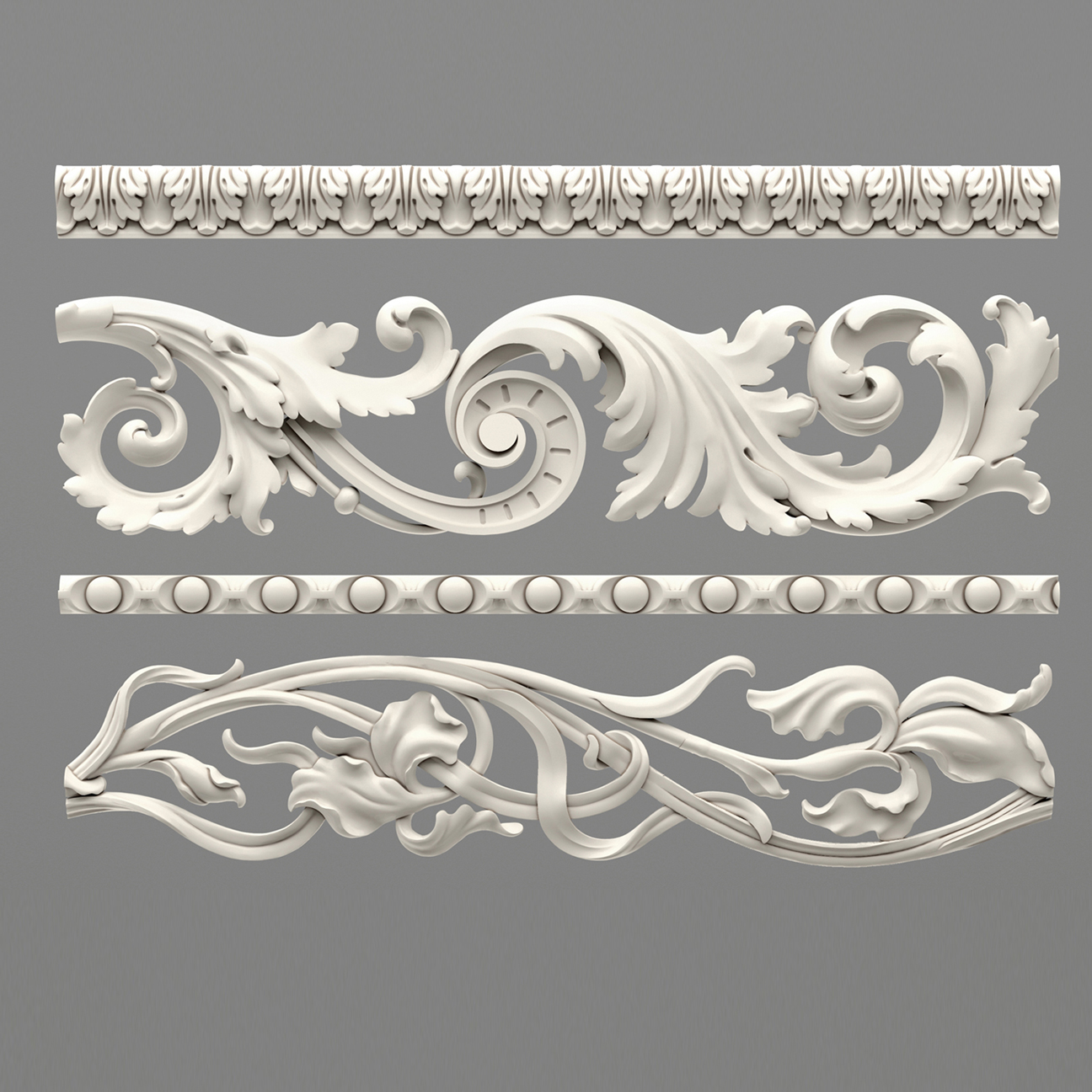
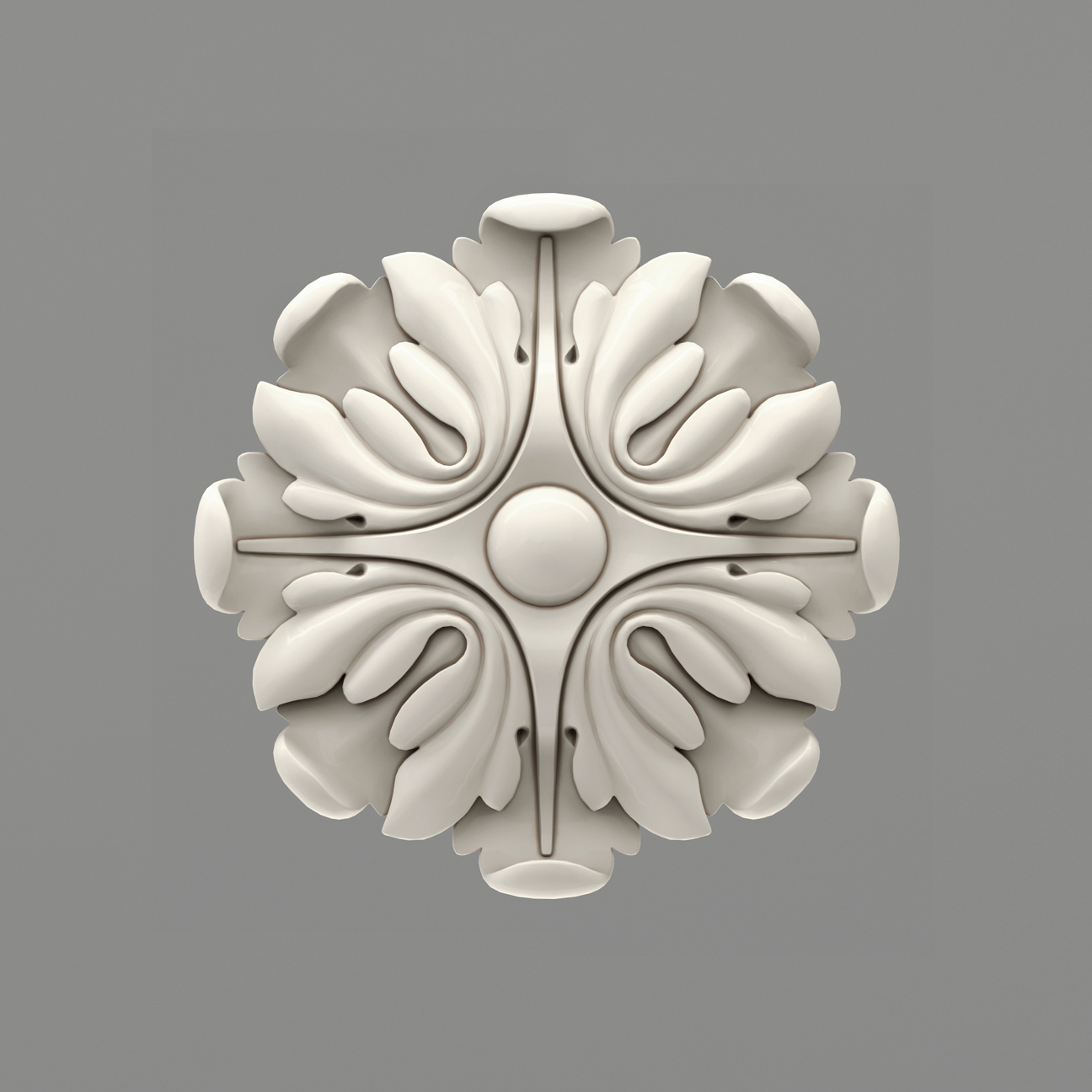
Polyurethane molding on a window facade— elements made of cast polyurethane with density 350-450 kg/m³ (higher than for interior stucco — facade stucco is stronger, more resistant to moisture, ultraviolet, frost), molded in silicone molds (relief detailing is high — small leaves, curls are clearly visible), primed in factory conditions (primer protects polyurethane, improves paint adhesion). Advantages of polyurethane for facade: lightness (5-10 times lighter than plaster, concrete — installation easier, does not require wall reinforcement), durability (polyurethane does not rot from moisture, does not crack from frost — lasts 30-50 years), variety (hundreds of profiles, shapes — from classic to modern), affordability (3-7 times cheaper than natural stone, concrete stucco).
Moldings for window framing
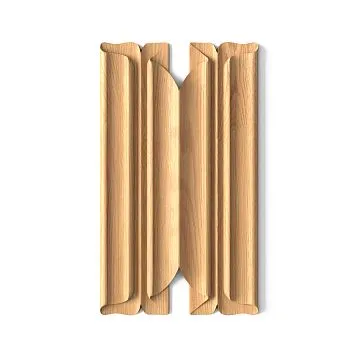
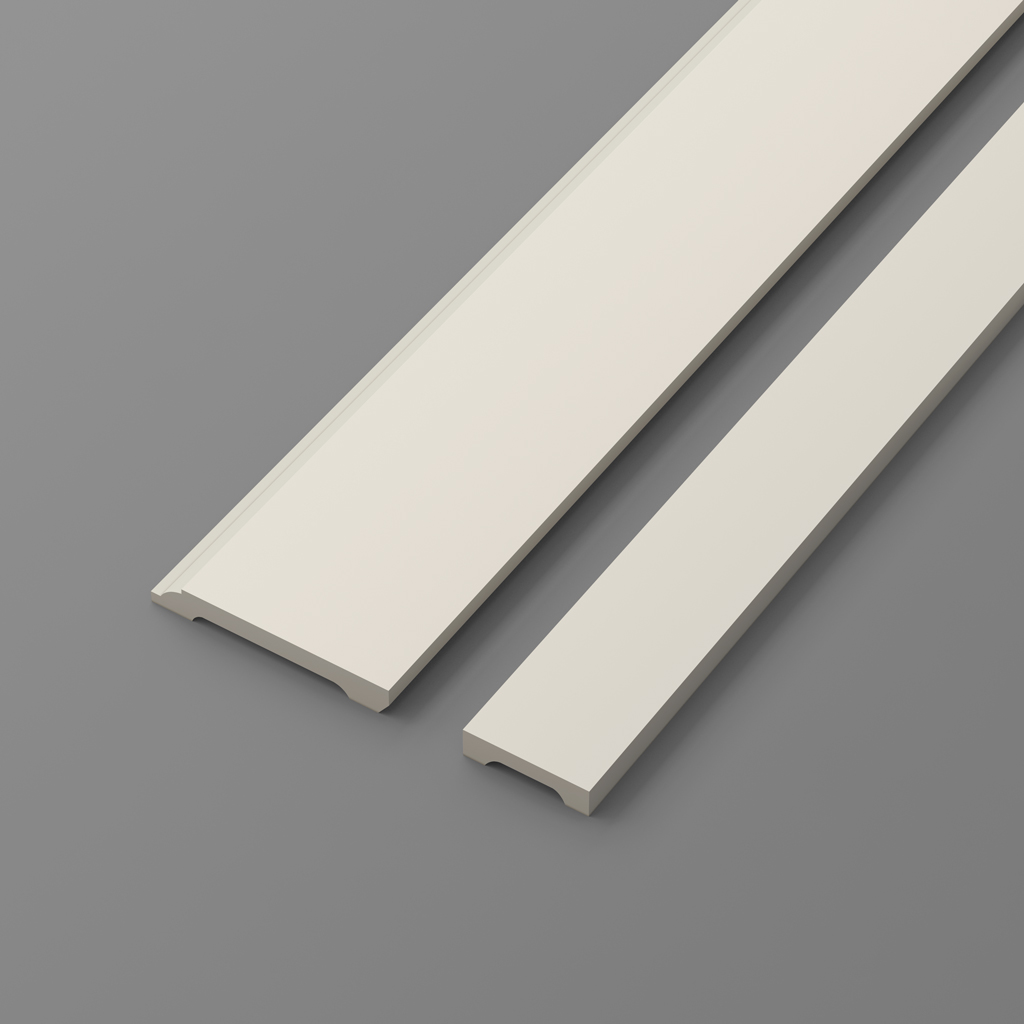
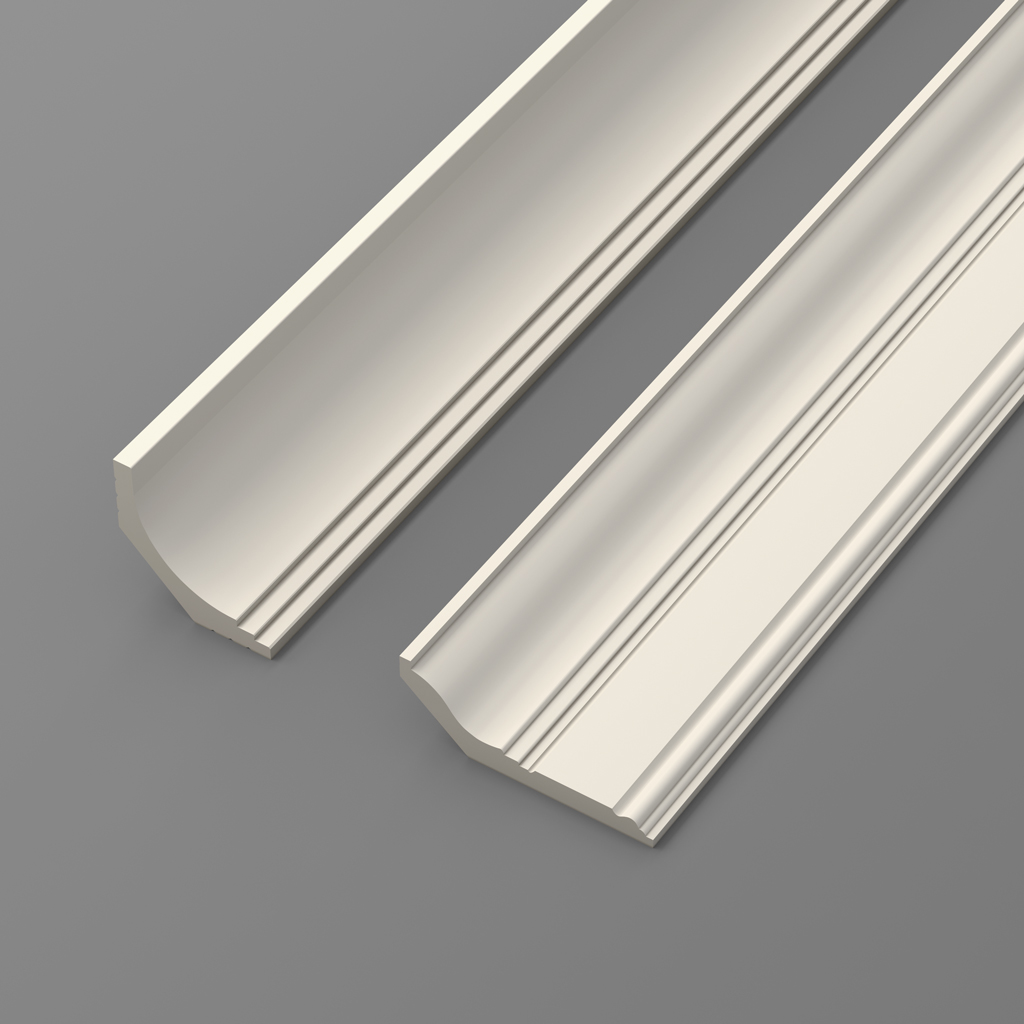
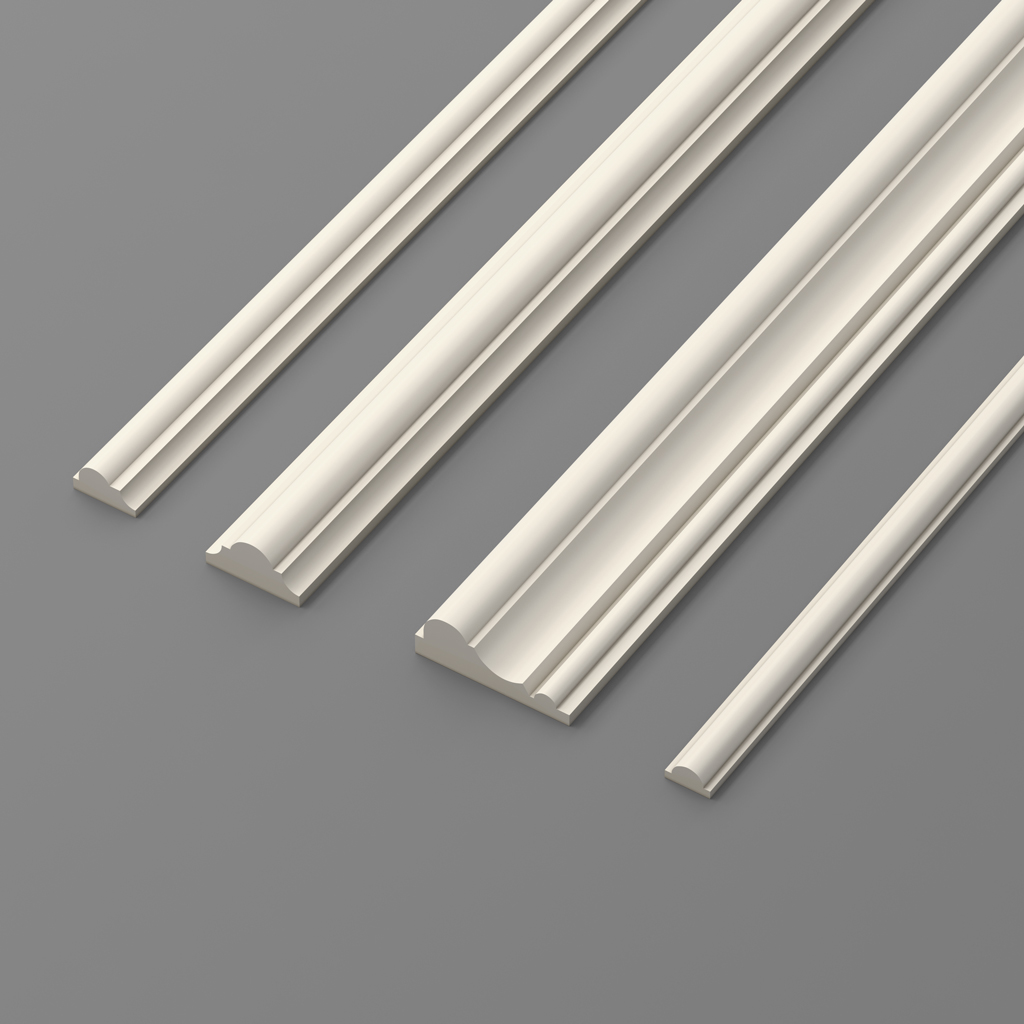
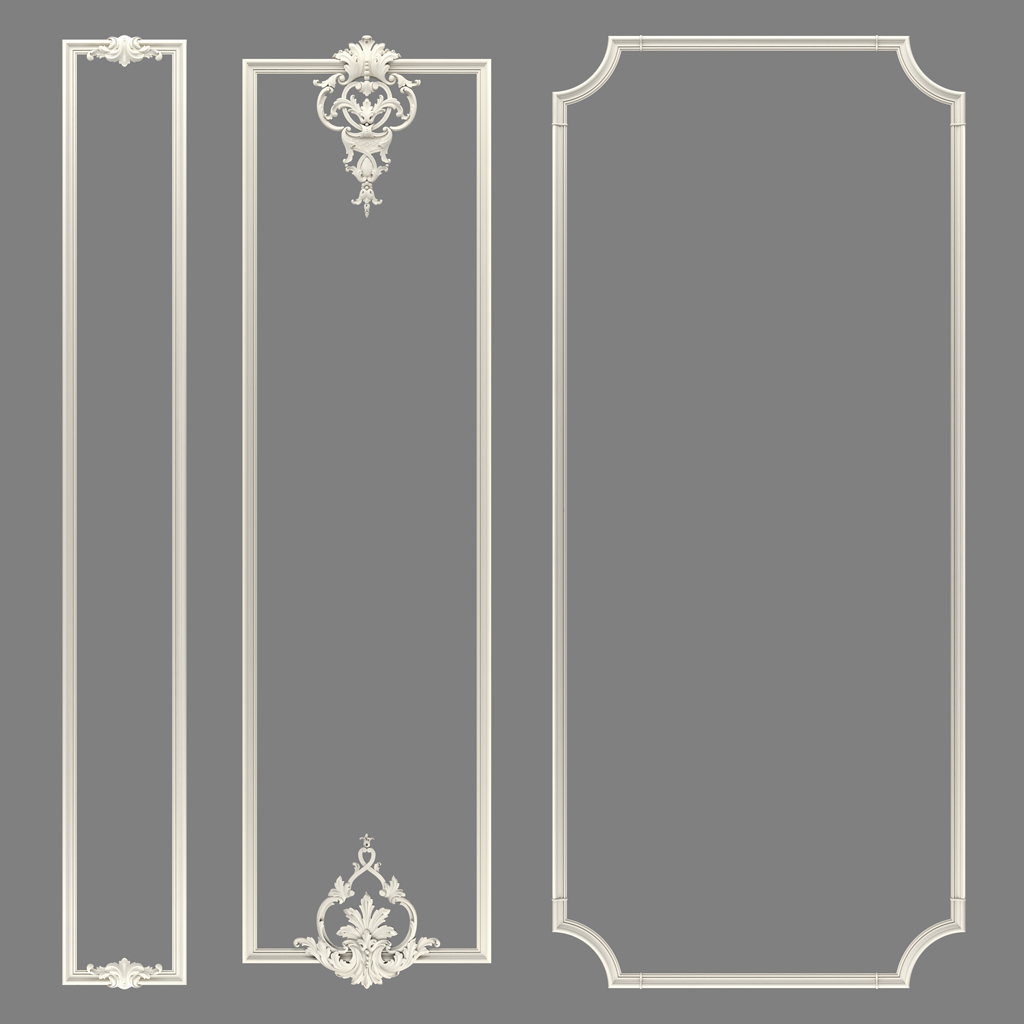
Facade moldings — strips width 50-200 mm, length 2.0-2.4 meters, profile flat, carved or with coves. Installed around the window (vertically on sides of window, horizontally above and below window — form a frame). Width of molding depends on window size (small window 80×100 cm — molding width 60-80 mm, large window 150×180 cm — molding width 120-150 mm — proportionality).
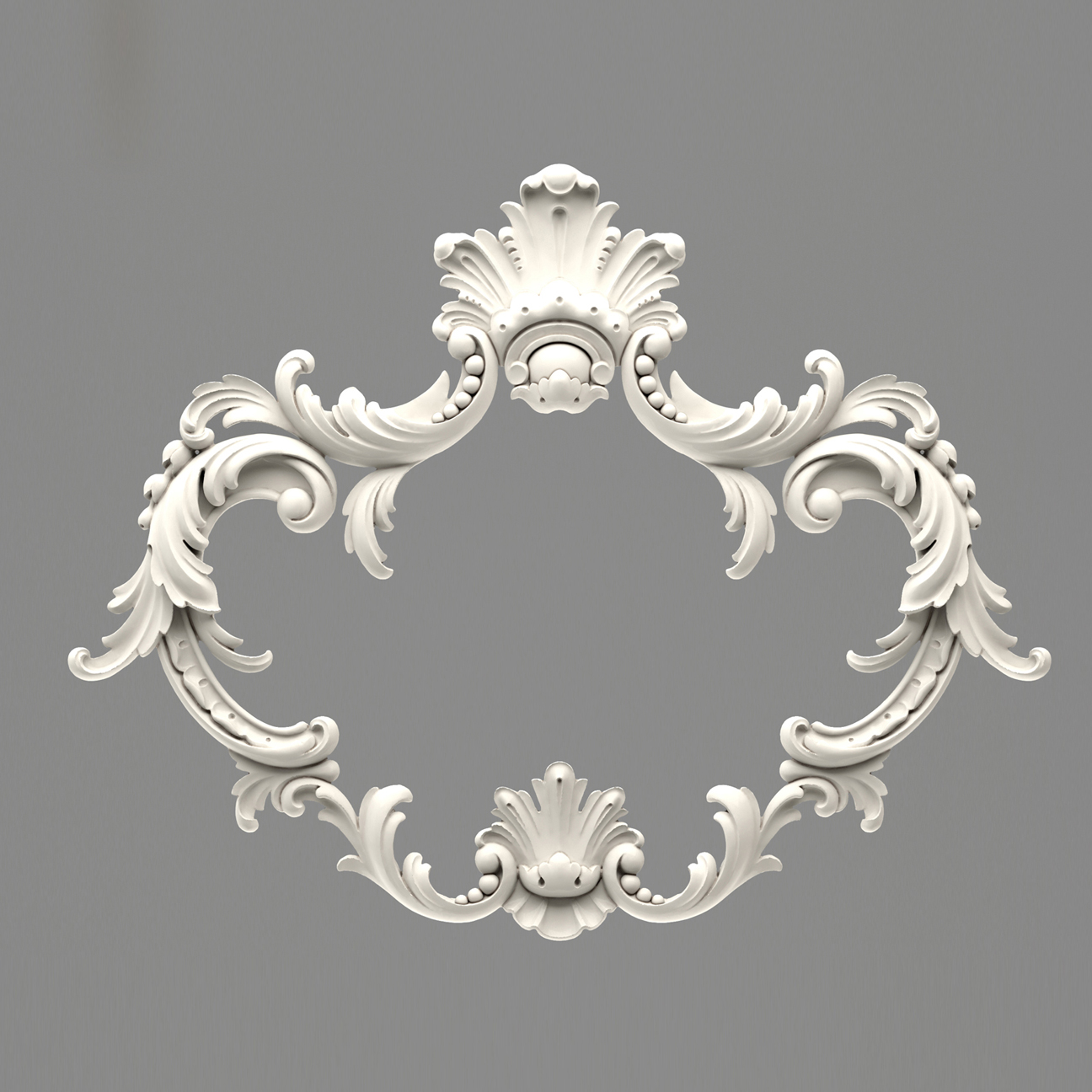
Molding profiles: smooth flat (minimalism — molding as a strip, emphasizes window boundary, does not create relief), with cove (one-two concave arcs — classic, transition from wall to window smooth), carved classic (beads, dentils, leaves — classicism, neoclassicism), Baroque carved (abundant carving — curls, flowers, volutes — Baroque, Rococo).
Molding color: white (universal — white moldings on colored walls — gray, beige, yellow — contrast, window highlighted), matching the walls (gray moldings on gray walls — monochrome, visible due to relief, play of light and shadow), contrasting (black on white walls — graphic quality, modernity; gold, bronze on beige walls — luxury, classic).
Keystones: accent above the window
Keystone — an element installed in the center of the upper part of a window (above the window, at the junction of two vertical moldings or in the center of a pediment). Shape trapezoidal (widens downward — imitation of a stone closing an arch vault, although the window is rectangular), size height 15-40 cm, width 10-30 cm (depends on window size — small window — small keystone 15×10 cm, large — large 40×30 cm). Relief carved (mascaron — human face, lion, gorgon; floral ornament — leaves, flowers; geometric — volutes, scrolls) or smooth (flat surface without carving, relief created by trapezoidal shape).
Application of keystone: classic technique (popular in Renaissance, classical architecture — palace, mansion windows framed by moldings, keystone above window — accent, attracts gaze). Modern application — private houses, cottages in classic, neoclassical style (keystone above each window of front facade — rhythm, ceremonial appearance).
Pediments: canopies over windows
Pediment (window pediment) — horizontal element, canopy over a window (protrudes from wall by 10-20 cm, width equals window width plus 10-30 cm — pediment wider than window, overhangs on sides). Pediment shapes:
Triangular: classic (two sloping planks from edges of pediment converge at center at an angle — triangle, like gable of Greek temple). Used in classicism, neoclassicism (ceremonial houses, mansions — triangular pediments over first-floor windows — solemnity).
Arched (segmental): plank curves upward in an arc (like an arch — softness, smoothness of lines). Used in Baroque, Art Nouveau (romantic, plastic facades — arched pediments over windows — organic, elegance).
Straight (cornice): horizontal plank (flat or with profile — beads, dentils), without slope, without curve (laconic, strict). Used in modern classic, minimalism (straight pediment — functionality, protection of window from precipitation, without excessive decorativeness).
Broken: triangular or arched pediment, where upper part is broken in center (two halves of pediment diverge, vase, urn, cartouche — decorative element placed in break). Used in Baroque (excessive decorativeness, play with classical forms).
Pediment structure: A pediment consists of a cornice (horizontal plank - the base) and consoles (brackets on the sides of the pediment - visually support the cornice, although structurally the pediment is attached to the wall with anchors, dowels). Consoles are carved (volutes, leaves, geometric shapes - decorative) or smooth (minimalism).
Window sill cornices: bottom finishing
Window sill cornice - a horizontal element under the window (installed at the level of the window sill or slightly below, width equals the window width plus 10-20 cm, protrudes from the wall by 5-10 cm). Functions: protection (water running down the window hits the cornice, flows forward, does not reach the wall under the window - the wall does not get wet), decoration (the cornice finishes the window from below - a complete frame: moldings on the sides, pediment on top, cornice below - the window is framed on all sides).
Cornice profile: smooth (flat plank with a slight protrusion - simplicity, functionality), carved (beads, dentils, coves - classic, matching the pediment, moldings).
Wooden window surrounds: the tradition of Russian architecture on a modern facade
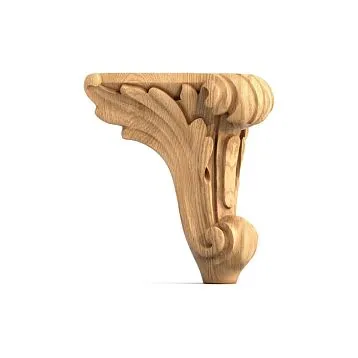
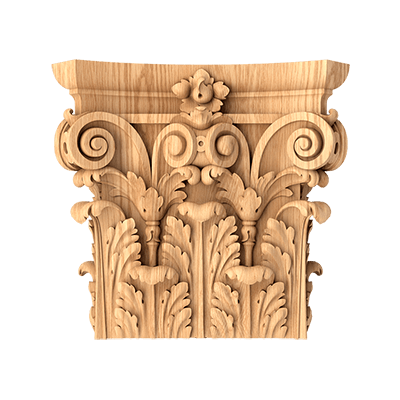
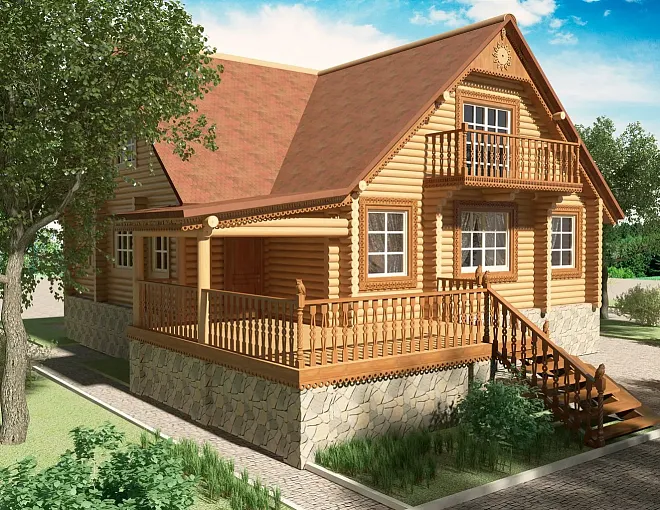
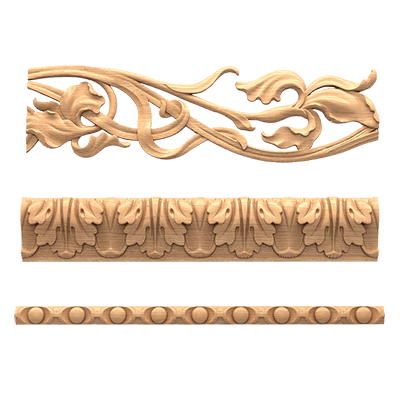
wooden window decorwith carved window surrounds - a tradition whose roots go back to the wooden architecture of Rus' (izbas, terems of the 16th-19th centuries were decorated with carvings - not only windows, but also roof ridges, gable boards, porch pillars). Wooden window surround - a plank thickness 20-40 mm, width 80-200 mm, installed around the perimeter of the window (vertically on the sides, horizontally above and below the window), carving on the plane of the surround (relief 5-20 mm - patterns visible from afar, create play of light and shadow). Application today: wooden houses (made of timber, logs - surrounds made of the same wood - unity of material, style), brick, plastered houses in Russian style (country estates, dachas - owners want to emphasize national color, connection with traditions).
Types of carving on window surrounds
Blind (flat) carving: the ornament is cut into the thickness of the board (background and pattern are on the same level, the pattern is formed by depressions, grooves - shadows, lines). Technique: the board is marked (ornament pattern is drawn with a pencil, template), the carver cuts the lines with chisels (grooves depth 3-10 mm - form contours of leaves, flowers, geometric shapes). Simplicity of execution (blind carving is simpler than openwork, faster), strength (the board is not weakened by through cuts - the surround is stronger).
Openwork (pierced) carving: the ornament is cut through (the background is removed, only the pattern remains - lace made of wood, through the pattern the wall is visible). Technique: the board is marked, the carver drills holes in places where the background needs to be removed (contours of the pattern are cut with a jigsaw, router - curls, leaves, flowers remain, connected by bridges). Maximum decorativeness (openwork surround is light, airy, like lace), but lower strength (thin bridges of the pattern can break from impact, from snow load in winter).
Applied carving: the ornament is cut separately (carved elements - rosettes, curls, roosters, suns - are cut from thin boards thickness 10-20 mm, with openwork carving), then applied onto a smooth window surround (the surround - a smooth board or with blind carving, onto it carved overlays are glued, nailed). Advantages: the surround is strong (base - thick board without through cuts), high decorativeness (overlays create volume - protrude above the plane of the surround by 1-3 cm, relief), possibility of replacement (if an overlay breaks - it is replaced with a new one, the surround remains).
Ornaments of carved window frames
Floral: leaves, flowers, grapevines, hops (symbolism of fertility, life, growth). Carved with smooth lines (curved stems, rounded leaves — organic, natural).
Solar: suns, rosettes (circles with rays emanating from the center — symbolism of the sun, light, warmth, protection from evil). Placed in the center of the upper part of the frame (above the window — the sun shines on the house, protects).
Geometric: rhombuses, triangles, zigzags, meanders (symbolism of earth, water, sky — ancient Slavic signs). Carved with straight lines, angles (graphic quality, strictness).
Zoomorphic: roosters, horses, birds (symbolism — the rooster wakes the sun, the horse is a symbol of movement, strength, the bird — freedom, soul). Carved as figurines (rooster on the ridge of the frame — tradition of Russian huts).
Anthropomorphic: human faces, mermaids, bereginyas (symbolism — protection of the home, amulet). Carved in the center of the upper part of the frame (face looks out to the street — wards off evil forces).
Wood species for window frames
Pine: the most popular (availability, affordability — 4-5 times cheaper than oak, easy to carve — soft wood, easier for the carver to carve fine details). Light color (yellow-white, with annual rings — warm shade). Disadvantages — softness (pine dents from impacts, scratches easier than oak), resinousness (pine releases resin — if the frame is on the sunny side, resin leaks in summer, sticky — needs treatment). Service life 15-25 years (with proper treatment with antiseptics, coating with varnish, paint).
Larch: biostable (contains gum — a resinous substance that protects against rot, fungus, insects), durable (density 650 kg/m³ — higher than pine, the frame is stronger). Reddish-brown color (warm, rich). 1.5-2 times more expensive than pine. Service life 30-50 years (larch on the facade lasts for decades without rotting, even without treatment — but treatment extends the lifespan).
Oak: the most durable, prestigious species (density 700 kg/m³, high hardness — the frame does not dent, does not scratch, lasts 50-100 years). Color from light yellow to brown (expressive texture — annual rings, medullary rays). Expensive (4-6 times more expensive than pine), difficult to carve (hardness — the carver requires more time, sharp tools). Used in elite houses (where budget allows, durability and prestige are important).
Spruce: an alternative to pine (similar properties – softness, ease of cutting, affordability), whiter color (almost white, with minimal yellow tint). Used less frequently than pine (pine is more accessible).
Combination of polyurethane and wood: material synergy on the facade
Why combinepolyurethane molding on the window facadeandwooden window decorwith window trims? Each material has advantages and disadvantages – the combination compensates for weaknesses and enhances strengths.
Polyurethane: practicality, variety
Polyurethane molding is lightweight (simple installation – one person can lift and attach an element weighing 2-5 kg, unlike concrete molding weighing 20-50 kg, which requires a crane and a crew), moisture-resistant (polyurethane does not absorb water – rain and snow do not damage the molding, no need for hydrophobic impregnation), frost-resistant (withstands freeze-thaw cycles without cracking – lasts in climates with winters down to -30°C), durable (30-50 years without repair). Variety of forms (hundreds of profiles of moldings, keystones, pediments – choice for any style, window size). Affordability (3-7 times cheaper than concrete or stone molding).
Disadvantages of polyurethane: synthetic nature (polyurethane is plastic, looks artificial if not painted properly – in luxury homes where naturalness is valued, polyurethane may be perceived as a budget substitute for stone or wood), flammability (polyurethane burns upon contact with fire – although the fire risk on the facade is minimal, unlike in interiors).
Wood: naturalness, warmth
Wooden window trims are natural (solid wood – texture, color are natural, tactile – wood is warm, pleasant), prestigious (carved trims made of oak, larch – a marker of tradition, craftsmanship, uniqueness – each carved trim is individual), eco-friendly (wood is a renewable material, without synthetics).
Disadvantages of wood: demanding maintenance (wood without protection rots from moisture, darkens from ultraviolet light, is affected by insects — requires treatment with antiseptics, coating with varnish, paint, renewal every 5-10 years), cost (carved oak window trims are expensive — 2-4 times more expensive than polyurethane moldings, hand carving increases the price by another 1.5-3 times), limited forms (wood can be carved, but complex shapes — arched pediments, large rosettes — are labor-intensive, expensive; polyurethane is cast in molds — any complexity without additional cost).
Synergy: polyurethane + wood
Option 1: main window framing — polyurethane (moldings around the window perimeter, pediment on top, window sill cornice below — white, painted — practicality, variety), accents — wood (carved overlays on the pediment — rooster, sun, flowers — natural wood, painted or varnished — uniqueness, warmth). Advantages: practicality of polyurethane (does not rot, lasts long, inexpensive) + decorativeness, naturalness of wood (carved accents bring warmth, uniqueness, tradition).
Option 2: wooden window trims around the window perimeter (carved from pine, larch — Russian style, tradition), polyurethane pediment on top (triangular, arched — classic, protection from precipitation — polyurethane does not rot from rain, unlike wood). Advantages: wood is visible (trims on the sides of the window — the view sees carving, texture — naturalness), polyurethane is functional (pediment protects the trims from above from running water — trims last longer).
Option 3: wooden window (frame made of solid wood — oak, larch, pine), polyurethane framing (moldings, pediment, keystone, window sill cornice — white, classic). Advantages: window is natural (wooden frame — prestige, eco-friendliness, warmth), framing is practical (polyurethane does not require maintenance, lasts for decades). Wooden frame is painted (white, gray enamel — to match the polyurethane framing, or natural wood color — contrast).
Installation on the facade: technologies for attaching stucco and wooden window trims
Installation of facade stucco, wooden window trims differs from interior (facade — exposure to precipitation, wind, temperature fluctuations, ultraviolet light — fastenings must be stronger, materials protected).
Facade preparation
Walls around windows must be even (irregularities no more than 5 mm per 1 meter — if the wall is wavy, stucco, trims do not fit tightly, gaps form), clean (dust, dirt, old paint are removed — adhesion of glue, dowels is maximum), dry (wet walls are not primed, glue does not hold — installation is carried out in dry weather, at temperatures +5...+30°C). Window slopes are plastered, primed (deep penetration primer — strengthens plaster, improves adhesion).
Fastening polyurethane stucco
Glue + dowels: combined fastening (the most reliable for the facade). On the back side of the element (molding, pediment, keystone) facade glue is applied (facade adhesive foam for polyurethane — moisture-resistant, frost-resistant; or polyurethane glue in tubes — applied in a zigzag, dots), the element is pressed against the wall, aligned (level — horizontal for pediments, cornices; vertical for moldings on the sides of the window), additionally fastened with dowels (plastic dowels 80-120 mm long with plastic or metal expansion elements, screwed through the element into the wall — through polyurethane into brick, concrete, aerated concrete). Number of dowels: 4-6 pieces per molding 2 meters long (spacing 40-50 cm), 4-8 pieces per pediment (depends on the size of the pediment). Dowel heads are recessed into the polyurethane (by 2-3 mm), filled with facade putty (acrylic, cement — moisture-resistant), sanded, painted (heads are not visible).
Glue only: for lightweight elements (narrow moldings width 50-80 mm, length up to 1 meter, small keystones height 15-20 cm). Glue is applied generously (the entire back side is covered with glue - adhesion is maximized), the element is pressed and held for 3-5 minutes (the glue sets). Disadvantage - in strong wind, vibrations (near a road, trucks passing by - vibration is transmitted to the walls) an element attached only with glue may fall off after several years. Recommended only for lightly loaded elements.
Mounting wooden casings
Screws: traditional method (strength, reliability). The casing is applied to the window reveal (aligned - vertical, horizontal checked with a level), holes 3-4 mm in diameter are pre-drilled in the casing (with a pitch of 30-50 cm - the thicker and heavier the casing, the more frequent the holes), wood screws 50-80 mm long are screwed through the holes (into the wall - if the wall is wooden - timber, log, the screw is screwed directly; if the wall is brick, concrete - plastic dowels are first inserted into the wall, screws are screwed into them). Screw heads are countersunk into the wood (by 2-3 mm), covered with wooden plugs matching the casing tone (plugs on PVA glue - invisible) or filled with wood filler (filler matching the wood tone, sanded, painted, varnished after drying - heads are not visible).
Glue + screws: combination (polyurethane glue or liquid nails is applied to the back of the casing, the casing is pressed against the reveal, additionally secured with screws - maximum strength). The glue fills irregularities between the casing and the reveal (sealing - moisture does not seep in), screws hold the casing rigidly.
Clips (hidden fasteners): for wooden casings with grooves (a groove - horizontal channel - is milled on the back of the casing, a clip - a metal plate with holes - is inserted into it, the clip is attached to the wall with screws, the casing is placed onto the clip with the groove - fasteners are not visible on the front side of the casing). Advantages - aesthetics (no screw heads, plugs on the casing - smooth carved surface), difficulty of removal (if the casing needs to be removed during repairs - more difficult to remove than with screws).
Joint sealing
After installing moldings, casings, joints (places where elements meet the wall, each other - casing corners, molding joints) are sealed. Facade sealant is used (acrylic, silicone, polyurethane - moisture-resistant, elastic, paintable). Sealant is applied with a gun into the seam (fills the gap between the element and the wall), smoothed with a spatula, finger (seam is even, moisture does not seep in). Sealant dries in 12-24 hours, after which elements can be painted.
Painting facade moldings and casings
Polyurethane moldings are painted with facade paints (acrylic, silicone - water-based, vapor-permeable, elastic, UV-resistant, frost-resistant). Primer (if the molding is not primed at the factory) with facade primer (acrylic deep penetration primer - improves paint adhesion, reduces paint consumption), painting in 2-3 coats (brush, roller - first coat base, second evens out the tone, third if necessary). Color white (universal - white molding on colored walls), matching wall tone (monochrome), contrasting (gold, bronze, black - accent).
Wooden casings are treated with antiseptic (protective impregnation - deep penetration, bioprotection against fungus, insects, rot, applied with a brush in 1-2 coats, absorbs in 4-12 hours), painted or varnished. Finishing options: painting with enamel (acrylic, alkyd facade enamel - colored, opaque, covers wood texture, casing painted white, gray, colored), staining with stain + varnish (stain gives color - walnut, mahogany, wenge, emphasizes texture, facade varnish protects - yacht varnish, polyurethane varnish - moisture-resistant, UV-resistant, in 2-3 coats), oil coating (facade wood oil - tinted or natural, absorbs into wood, protects, emphasizes texture, matte finish, renewed every 3-5 years).
Frequently asked questions about window framing
Can polyurethane molding be installed on the facade in winter?
No, not recommended (glue for polyurethane does not polymerize at temperatures below +5°C - does not set, molding does not hold). Installation is carried out in warm seasons (spring, summer, early autumn - temperature +10...+30°C, walls dry, glue works normally). If winter installation is critically necessary (repairs, deadlines) - a heat gun is used (the wall area where the element is installed is heated, temperature +15...+20°C is maintained until glue polymerization - 12-24 hours, labor-intensive, expensive).
How long does polyurethane molding last on a facade?
With proper installation (adhesive + dowels, joint sealing), quality painting (facade paint, 2-3 coats, renewal every 10-15 years), polyurethane molding lasts 30-50 years (does not rot, crack, or crumble). Longer than wooden molding without maintenance (untreated wood rots in 10-15 years), comparable to concrete molding (concrete lasts 50-100 years, but is heavy, expensive to install).
How to care for wooden window trims on a facade?
Wooden trims require periodic maintenance. Annual inspection (spring, after winter) (cracks in paint, varnish — moisture seeps in, wood begins to rot; darkening, blackness — fungus, mold; paint peeling — repainting needed). Every 5-10 years (depending on climate, coating quality) coating renewal (old paint, varnish removed by sanding or stripping, trim is re-treated with antiseptic, repainted, re-varnished — like new). If the trim is oiled — renewal every 3-5 years (old oil is wiped off, a new layer is applied — quick, wood is protected).
What is more expensive — polyurethane molding or wooden carved trims?
Depends on complexity. Simple polyurethane moldings are cheaper than simple wooden trims (smooth polyurethane molding width 80 mm, length 2 meters — 600-1000 rubles; smooth pine wooden trim width 80 mm, length 2 meters — 800-1500 rubles). Carved polyurethane moldings (with ornament) are more expensive (1200-2500 rubles per 2 meters), carved wooden trims are even more expensive (2000-5000 rubles per 2 meters, if hand-carved — 5000-15000 rubles per 2 meters, depends on carving complexity, wood species). For framing one window (perimeter 4-5 meters) smooth polyurethane molding — 2000-4000 rubles, carved — 4000-8000 rubles; smooth wooden trims — 3000-6000 rubles, carved openwork — 8000-20000 rubles, hand-carved — 20000-60000 rubles.
Where to order comprehensive window framing with molding and wooden trims?
From full-cycle manufacturers (factories producing polyurethane molding and wooden decorative elements). Advantages: unified project (designer creates a complete window framing project — polyurethane moldings, pediments, keystones + wooden trims or accents — coordinated in style, dimensions, colors), unified procurement (you order everything from one supplier — easier logistics, scheduling coordination), professional installation (manufacturer recommends a crew familiar with installing molding, wooden trims on facades — turnkey installation, warranty).
Conclusion: frame your windows with STAVROS materials
Polyurethane molding on a window facade— moldings, keystones, triangular, arched, straight pediments, window sill cornices — transform ordinary windows into architectural elements (not just holes in a wall, but compositions with verticals, horizontals, accents, relief). Polyurethane molding is lightweight (installation is simple — one person, adhesive + dowels, 4-6 windows framed per day), moisture-resistant (does not rot from rain, snow, lasts 30-50 years), diverse (hundreds of profiles from smooth minimalist to carved baroque — choice for any house style), affordable (3-7 times cheaper than concrete, stone molding).wooden window decorCarved window trims made from solid pine, larch, oak — a tradition of Russian architecture (floral, solar, geometric, zoomorphic ornaments — national character, connection with history), relevant on modern facades (wooden houses, country estates, dachas — carved trims create coziness, uniqueness, warmth of natural wood). The combination of polyurethane and wood (polyurethane is practical — doesn't rot, requires no maintenance, diverse, inexpensive; wood is natural — texture, warmth, prestige, uniqueness of carving) creates synergy (practicality + naturalness, functionality + decorativeness, durability + uniqueness). Installation on the facade (facade adhesive + dowels for polyurethane, screws + adhesive for wood, sealing of joints, painting with facade paints, varnishes — technology ensures strength, protection from precipitation, durability of 30-50 years).
STAVROS Company — the largest Russian manufacturer of polyurethane facade stucco, wooden decorative elements (trims,House Carving), with 25 years of experience, own production, delivery across Russia.
STAVROS polyurethane facade stucco — assortment of 300+ models: facade moldings width 50-200 mm (smooth profiles, classical — beads, dentils, baroque — leaf carvings, scrolls), keystones height 15-40 cm (trapezoidal, carved — mascaron, floral ornaments, smooth), pediments (triangular, arched, straight, broken — sizes for windows from small 80×100 cm to large panoramic 200×250 cm), window sill cornices width 80-150 mm (smooth, carved), consoles (brackets for pediments — volutes, leaves, geometric). Polyurethane density 380-450 kg/m³ (higher than for interior stucco — facade is stronger), color white primed (for painting), painted (white, gold, bronze, patina). Custom stucco manufacturing (according to your sketches, window sizes — unique pediments, keystones, moldings, lead time 3-5 weeks).
STAVROS wooden window trims — carved from solid pine, larch, oak (width 80-200 mm, length custom — to fit window sizes, thickness 20-40 mm). Carving types: blind (flat — ornament carved with recesses, grooves, background and pattern on one level — strength, simplicity), openwork (pierced — ornament carved through, background removed, leaving lace — maximum decorativeness), applied (carved elements cut separately, applied onto smooth trim — volume, relief, possibility of element replacement). Ornaments: floral (leaves, flowers, grape vines — fertility, life), solar (suns, rosettes — light, warmth, talisman), geometric (diamonds, triangles, zigzags — graphic quality, ancient symbols), zoomorphic (roosters, horses, birds — symbols of strength, movement, freedom), anthropomorphic (faces, mermaids, bereginya — home protection). Custom carving (according to your sketches, drawings, photographs of antique trims — master carver creates a unique trim, lead time 4-8 weeks).
Wooden door casings and baseboardsmade from solid oak, ash, pine, larch — for interior and facade (window trims, door trims, floor skirting boards, ceiling — unity of material, style).
STAVROS services — architect, designer consultations (selection of stucco, trims to match house style — classical, Russian, modern; calculation of element sizes to fit window dimensions — proportionality, harmony), window framing design (3D facade visualization with stucco, trims — see the result before ordering, make adjustments), material calculation (quantity of moldings, pediments, keystones, trims — accurate calculation without overpayments), installation services (STAVROS installation teams or verified contractors — turnkey stucco and trim installation, 2-year work warranty).
Delivery across Russia — Moscow and region by courier (1-3 days, stucco, trims packed in corrugated cardboard, film, foam — protection from damage), regions by transport companies (PEK, Delovye Linii, Baikal-Service — 5-21 days depending on region, factory packaging, cargo insurance).
By choosing STAVROS, private house and cottage owners, architects choose quality (premium-class materials, controlled production, 3-year warranties), variety (300+ stucco models, custom trim carving), professionalism (consultations, design, installation), reliability (25 years on the market, thousands of completed projects — facades of houses, estates, hotels).
Frame your windows so that each window becomes a decoration of the facade —polyurethane molding for house facades(moldings, pediments, keystones in white, gold — classic, grandeur), wooden carved window trims (suns, flowers, roosters — Russian style, coziness, traditions), all installed, painted, protected, durable. With STAVROS materials, your house will gain a face — not a faceless box with windows, but an architectural work where each window is framed, accentuated, highlighted, where classicism combines with practicality, tradition — with modern technologies!